Choosing a solar street light feels overwhelming. You see countless options online, all promising great performance. But a wrong choice can mean a dead light in winter and a completely wasted investment.
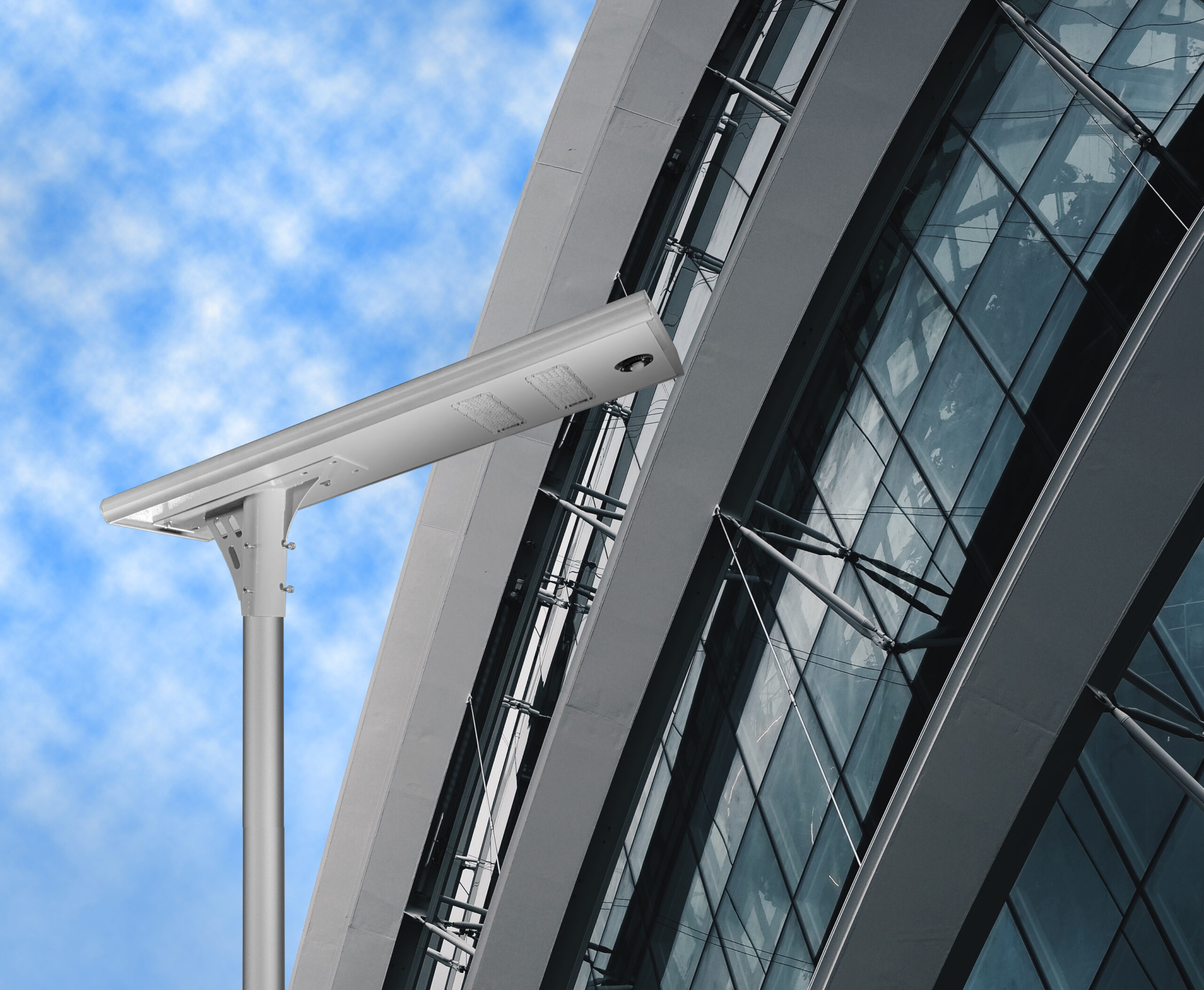
To choose the best solar street light, you must analyze it as a complete system. Focus on three key components: a high-quality, properly sized LiFePO4 battery, a high-efficiency monocrystalline solar panel, and an intelligent MPPT controller that maximizes charging.
I remember when the first all-in-one solar lights hit the market. A client of mine, eager to save on installation costs, bought a batch from a cheap online supplier without consulting me. They looked great for the first summer. Then winter came. One by one, the lights started failing. The batteries couldn't hold a charge in the cold, and the small panels couldn't generate enough power on short, cloudy days. He ended up having to replace the entire project. That expensive lesson taught me that with solar lights, you're not just buying a lamp; you're buying an independent power plant. Let's break down the questions you should be asking to avoid making the same mistake.
Are yellow or white street lights better?
You see both colors on streets, and the choice seems purely cosmetic. But the color of the light has a major impact on safety, the environment, and how people feel in the space. It's one of the first decisions to make.
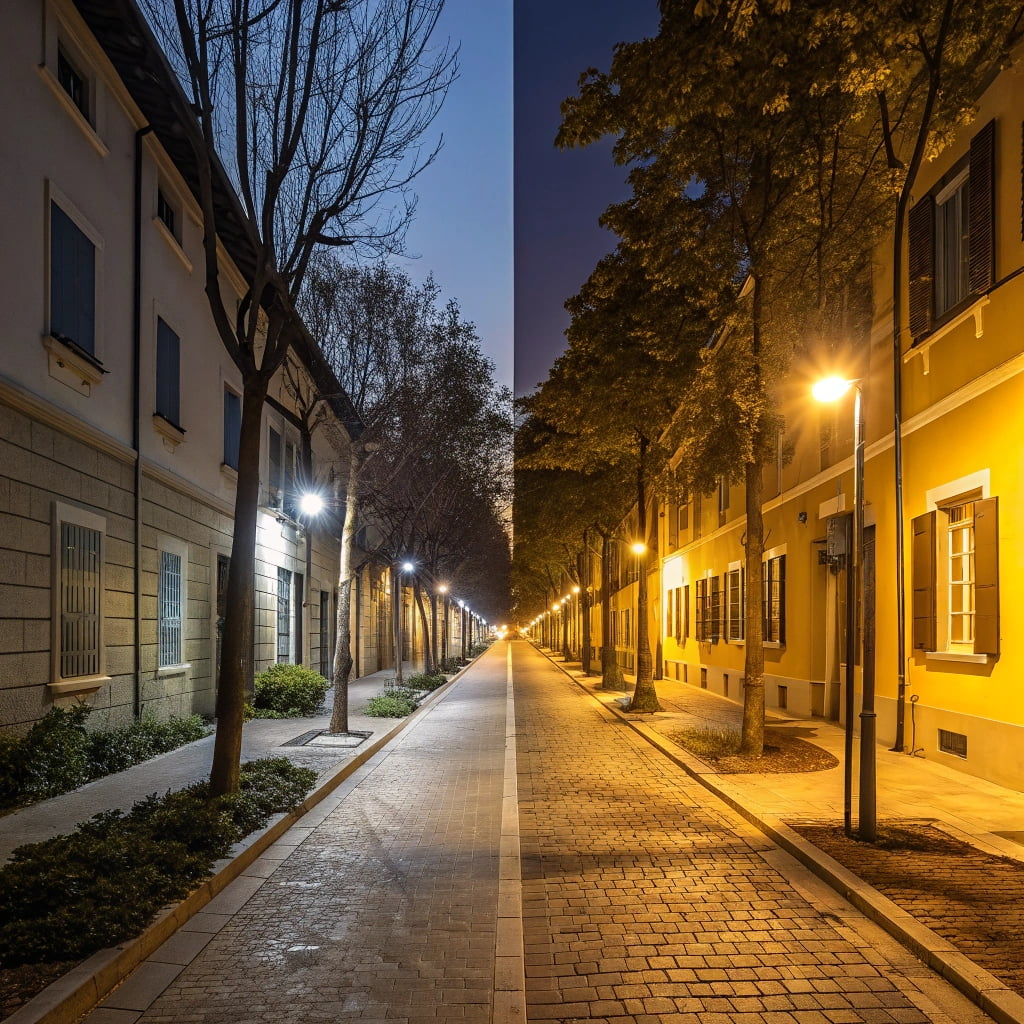
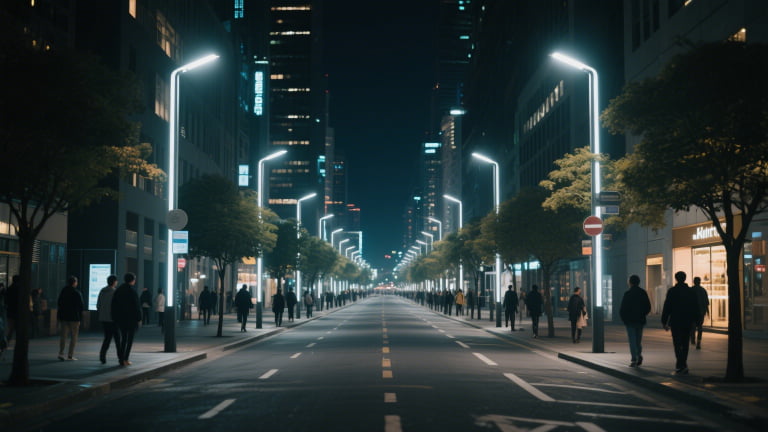
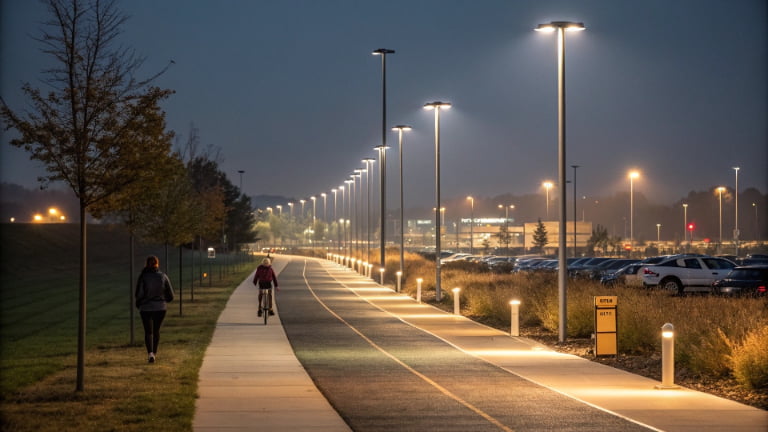
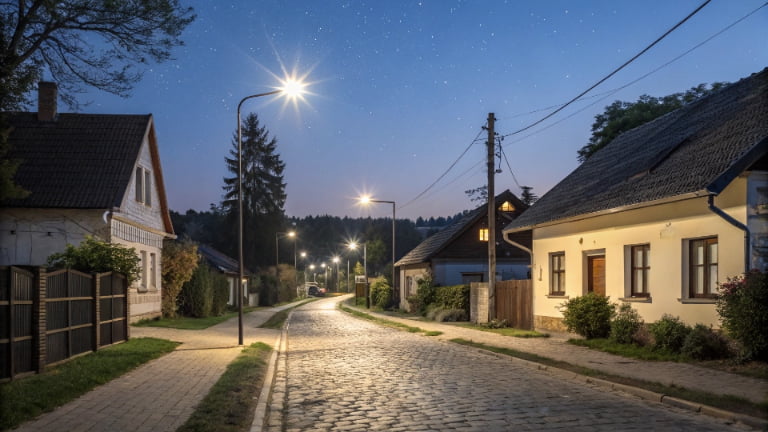
Neither is universally "better"; it depends on the application. White light (4000K-5000K) provides better visual sharpness and color recognition for security. Yellow/warm light (2700K-3000K) is less disruptive to wildlife and human sleep cycles, creating a more welcoming feel.
The technical term for light color is "Correlated Color Temperature" or CCT, measured in Kelvin (K). When I started in the factory, old high-pressure sodium lamps were all a harsh yellow-orange. The first LEDs were a very cold, clinical blue-white (6000K+). Today, we have much better options, and the industry has learned a lot.
For most of my clients, I now recommend something in the middle. A "neutral white" like 4000K is often the best compromise. It's clean and clear, making it easy to see details for security cameras, but it doesn't have the harsh blue glare of 5000K or 6000K light. For residential streets, parks, or areas near nature preserves, a "warm white" of 3000K is the superior choice. It's much easier on the eyes, creates a cozy atmosphere, and scientific studies have shown it has a significantly lower impact on nocturnal animals and insects. The trend is definitely moving away from the very cold, blue-white lights of the past.
| CCT (Kelvin) | Common Name | Best For | Considerations |
|---|---|---|---|
| 2700K - 3000K | Warm White | Residential areas, parks, eco-sensitive zones | Softer, less glare, better for wildlife. |
| 4000K | Neutral White | General roads, parking lots, commercial areas | Excellent balance of clarity and comfort. |
| 5000K - 6500K | Cool White / Daylight | Highways, industrial areas, high-security zones | Can be perceived as harsh glare, potential blue light issues. |
How about the working efficiency of solar street lights in winter?
This is the most critical question for anyone not living on the equator. A solar light that can't survive the winter is useless. You worry that short days and cloudy weather will leave your streets in the dark when you need light the most.
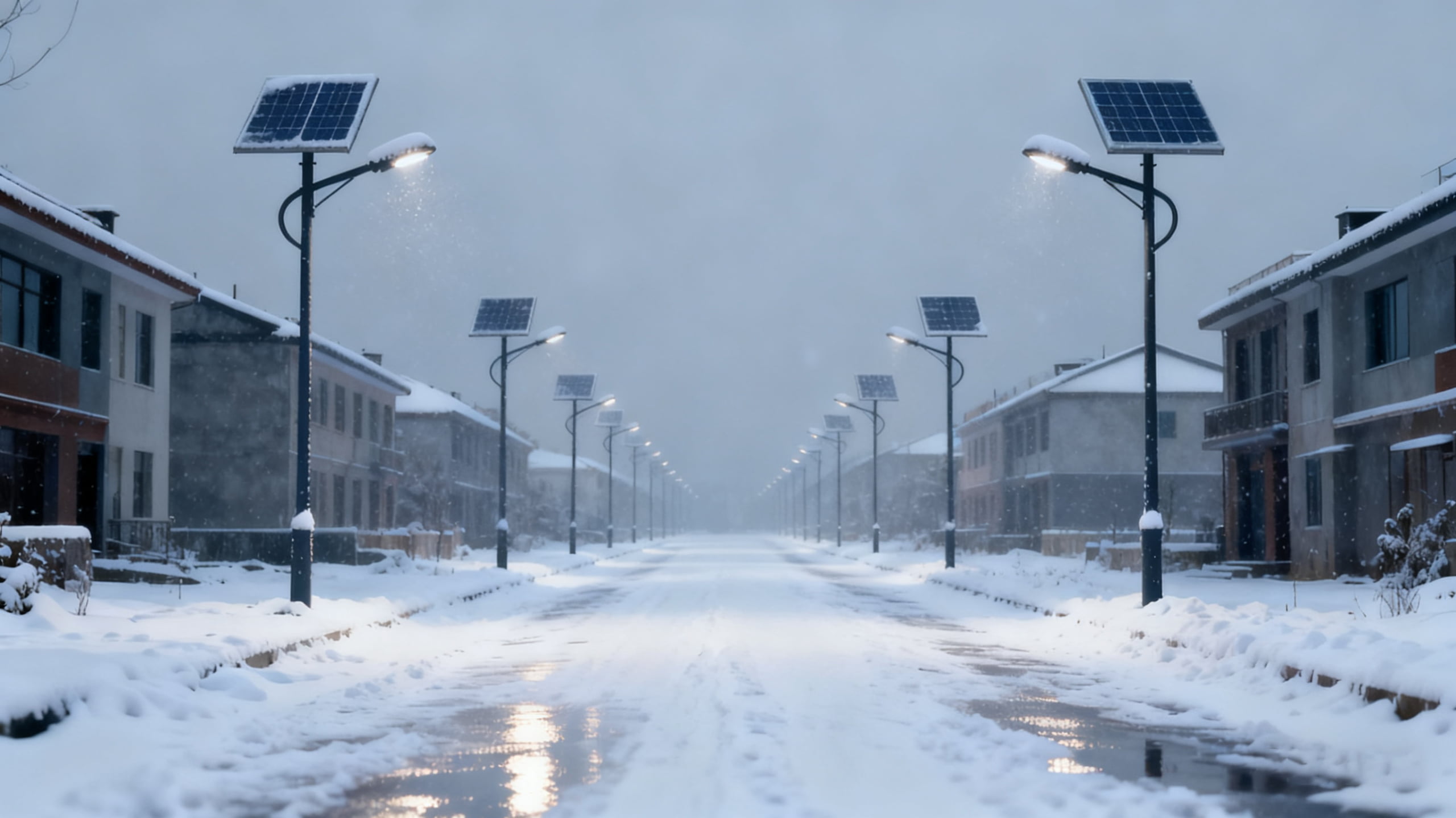
Winter efficiency drops significantly due to fewer sunlight hours and a lower sun angle. A properly designed system compensates for this with a larger solar panel and a bigger battery, specified to guarantee operation even on the shortest day of the year at that location.
This is where you separate the professional suppliers from the cheap resellers. A good supplier will ask you for the installation city. Why? Because they will use that data to calculate the "peak sun hours" for the worst month of the year (usually December or January). This calculation determines how big the solar panel and battery need to be.
We call this "system sizing." A system sized for southern Spain will fail completely in Sweden. For a project in a location with harsh winters, we would design for:
- Larger Solar Panel: To capture as much energy as possible from the low-hanging winter sun in a shorter amount of time.
- Larger Battery Capacity: The battery must be able to store enough power to last for several consecutive cloudy or snowy days. We call this "autonomy." A good system should have at least 3 days of autonomy.
- Smart Controller: An intelligent controller (especially an MPPT type) is crucial. It can be programmed to dim the light during low-traffic hours (e.g., 100% brightness until midnight, then 30% until 5 AM). This strategy drastically reduces energy consumption and is key to making the stored power last through long winter nights.
When a client shows me a very cheap solar light online, the first thing I notice is a tiny panel and an unrealistic battery claim. It's a recipe for winter failure.
How cold is too cold for solar lights?
Winter brings not just less light, but also freezing temperatures. You've heard that cold can kill batteries, and you're worried your expensive solar light will be ruined by a single cold snap. This is a legitimate and very important concern.
The critical temperature is 0°C (32°F) for the battery. Standard lithium-ion batteries can be permanently damaged if charged below freezing. High-quality solar lights use LiFePO4 batteries with a built-in Battery Management System (BMS) that prevents charging in these conditions.
The light fixture itself and the solar panel are not much affected by cold. In fact, solar panels are slightly more efficient in cold, sunny weather. The entire issue comes down to the battery. It's the heart of the system, and it's the most vulnerable part.
You can discharge a battery in the cold, but charging it below freezing is the real danger. It can cause a chemical reaction called "lithium plating" that permanently reduces the battery's capacity and can even lead to internal short circuits. A cheap solar light has no protection against this. It will try to charge the battery no matter how cold it is, and it will destroy it.
A quality system uses a smart BMS. When the BMS detects a temperature below 0°C, it will simply stop the charging current from the solar panel until the temperature rises. For extremely cold climates, like in Canada or Northern Europe, we use special low-temperature batteries. These have one of two solutions:
- Low-Temperature Cells: Specially formulated battery cells that can safely charge at temperatures down to -20°C (-4°F).
- Internal Heating: The BMS uses a tiny amount of solar energy to run a small internal heating pad to warm the battery cells up to a safe temperature before it begins the charging process.
This technology is what makes a solar light truly "all-weather" and is a key difference you are paying for in a high-end product.
Are termites attracted to solar lights?
This question might sound strange, but for clients in tropical or subtropical regions, it's a practical concern. You are investing in new infrastructure, and you want to be sure it won't be damaged by local pests.
No, termites are not attracted to solar lights. The entire unit, including the pole, fixture, and panel, is made of metal, glass, and plastic. Termites are attracted to wood (cellulose), and there is nothing in a solar street light system for them to eat.
I get this question occasionally from clients in places like Southeast Asia or parts of Australia. It usually comes from a misunderstanding of what attracts different kinds of insects. Many flying insects, like moths, are attracted to light, especially light in the UV and blue spectrum. This is called phototaxis. That's why you see moths fluttering around a porch light.
However, termites are completely different. They are social insects that live in colonies and their primary food source is cellulose, the organic compound found in wood and plants. They have no interest in the light itself. A solar street light system is constructed entirely of inorganic materials that termites cannot consume:
- The Pole: Typically made of galvanized steel or aluminum.
- The Light Fixture: An aluminum alloy housing with a glass or polycarbonate lens.
- The Solar Panel: Made of silicon, glass, and an aluminum frame.
While you might see other bugs flying around the light at night, you can be 100% confident that the light is not attracting termites. When we design for these regions, our concerns are things like high humidity, salt spray corrosion in coastal areas, and making sure the pole can withstand typhoon-level winds—not termites.
Conclusion
The best solar street light is not the one with the highest lumens or the lowest price. It is a balanced, engineered system designed specifically for your climate, ensuring reliability through the darkest winter nights. By focusing on the right battery type, panel size, controller technology, and light color, you can avoid the common pitfalls and invest in a solar street light that delivers consistent performance for years to come.