You need to deploy solar street lights, but the calculations seem like a dark art. You're afraid of spending thousands on a system that works in the summer but dies every time there are a few cloudy days, making the entire investment a waste.

To size a system, you first calculate the daily energy consumption of the light. Then, size the battery to store enough energy for several cloudy days, and finally, size the solar panel to fully recharge the battery in a single day of average sunlight.
This calculation is the most critical step in designing a solar light. When I was starting out in the industry, I saw countless projects fail simply because someone used a "one-size-fits-all" approach. The truth is, a light that works perfectly in sunny Arizona will fail miserably in cloudy Seattle with the same components. The process isn't complicated, but it demands that you respect the local environment and build in a margin of safety. Let's walk through it step by step.
What Standard Should Battery Capacity Follow?
You see terms like "3 days autonomy" or "5 days autonomy." You're not sure which to choose, and you worry that picking the wrong one will leave your streets dark when they're needed most.
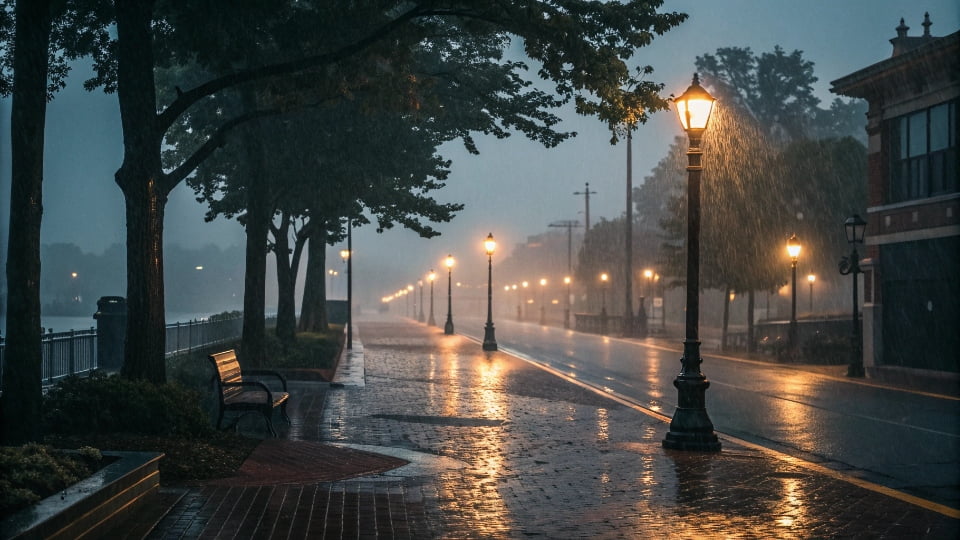
The battery capacity must be large enough to power the light for a minimum of three consecutive days with zero sunlight. This "3-day autonomy" is the professional standard for ensuring reliability in most climates.
"Autonomy" is simply the number of days the system can survive on a full battery charge without any help from the sun. This is your safety buffer against bad weather. While a single day of autonomy might work in a desert, it's a recipe for failure anywhere with seasons. I always advise my clients to start with a 3-day standard as a baseline for public safety and reliability. Here’s what it means in practice:
| Autonomy Standard | Risk Level | Best Use Case | My Professional Advice |
|---|---|---|---|
| 1-2 Days | Very High | Sunny, desert climates with predictable weather. | Unacceptable for most public or security lighting projects. |
| 3-4 Days | Low (Standard) | Most regions in North America and Europe. | This is the gold standard. It provides a robust safety margin for a reliable system. |
| 5+ Days | Very Low | Regions with long, dark winters or frequent storms (e.g., UK, Pacific NW). | Necessary for critical infrastructure where failure is not an option. |
The calculation is:
Required Battery Capacity (Wh) = Daily Energy Consumption (Wh) x Days of Autonomy
So if your light uses 600Wh per day, you need a battery that can store at least 1800Wh (600 Wh x 3 days) to meet the 3-day standard.
How to Match Solar Panel Power to Needs?
You've calculated your battery size, but now you need to charge it. A panel that's too small will never catch up, while one that's too big is wasted money. Finding the sweet spot is key.
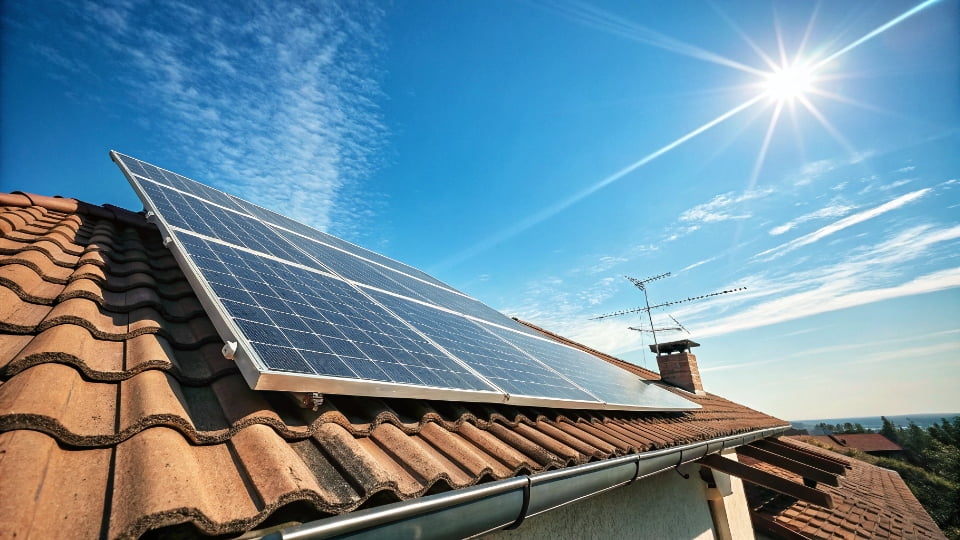
The solar panel must be powerful enough to generate the light's total daily energy consumption in just one day's worth of average local sunlight, known as "Peak Sun Hours" (PSH).
The biggest mistake people make here is confusing "daylight hours" with "Peak Sun Hours." A PSH is the equivalent of one hour of full, intense, noontime sun. A location might have 14 hours of daylight in the summer, but only 4-5 PSH. In winter, that might drop to 2 PSH. We must always design for the worst-case scenario (winter).
You can find the average PSH for any location online. The formula is:
Required Panel Wattage (W) = Daily Energy Consumption (Wh) / Peak Sun Hours (h) / 0.85
We divide by 0.85 to account for system losses (dirt on the panel, wire resistance, battery inefficiency).
For our example light that uses 600Wh a day, in a location with 4 PSH in winter:
Required Panel Wattage = 600 Wh / 4 h / 0.85 = 176W
So, we would specify a solar panel of 180W or higher to ensure the battery gets fully recharged each day.
How Does Load Power Affect Size Calculation?
You might think you can just pick a light fixture and then figure out the solar part. But this is backward. The power of the light fixture is the single most important number that drives everything else.
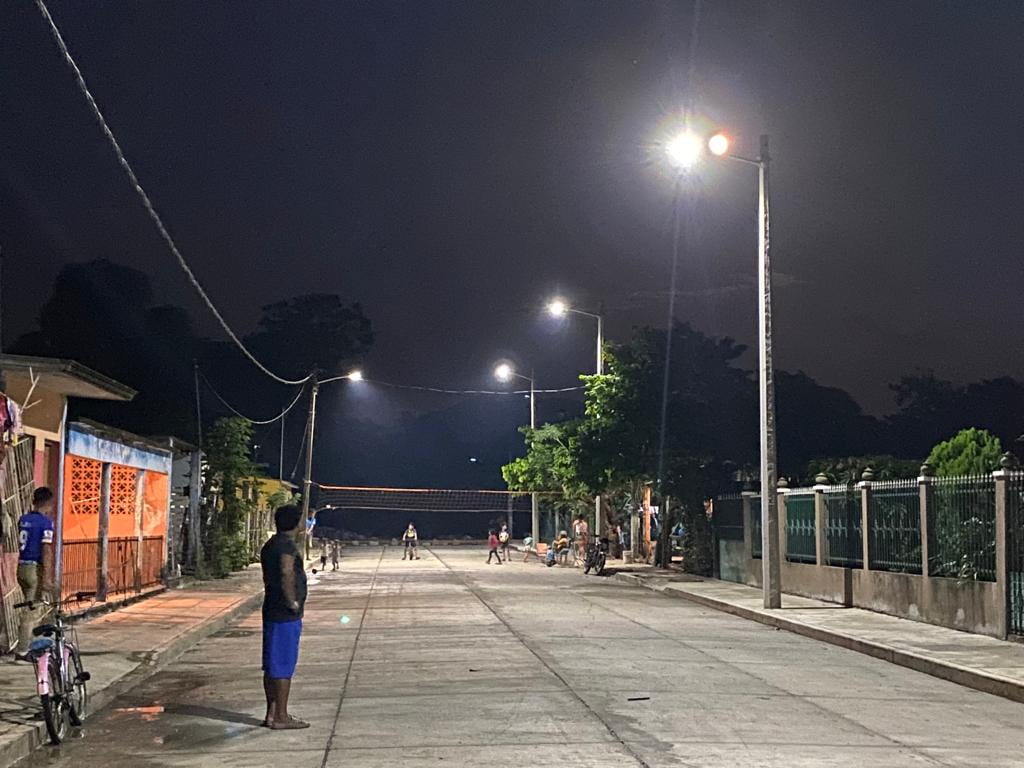
The load power (the wattage of the light) is the starting point and foundation of the entire calculation. It directly determines the daily energy consumption, which in turn dictates the required size of both the battery and the solar panel.
Everything starts with the load. A small change in the light's power has a huge ripple effect on the total system cost. The formula is simple:
Daily Energy Consumption (Wh) = Load Power (W) x Daily Operating Hours (h)
Let's say you need a light to run for 12 hours. Look at the difference:
The 60W light requires double the battery capacity and double the solar panel wattage. This is why smart controls are so valuable. Instead of running at 100% all night, we can program the light to dim during low-traffic hours.
| Operating Profile (12 hours) | Avg. Power Draw | Daily Energy Use | System Size |
|---|---|---|---|
| 60W at 100% for 12 hours | 60W | 720 Wh | Large |
| 60W at 100% for 4h, 30% for 8h | 30W | 360 Wh | Medium |
By using a smart dimming profile, we cut the required battery and panel size in half, dramatically reducing the project cost without compromising safety.
Can Environmental Factors Be Ignored?
You want the simplest calculation possible. It's tempting to use generic numbers for sun hours or to ignore temperature, but this is the most common and costly mistake you can make.
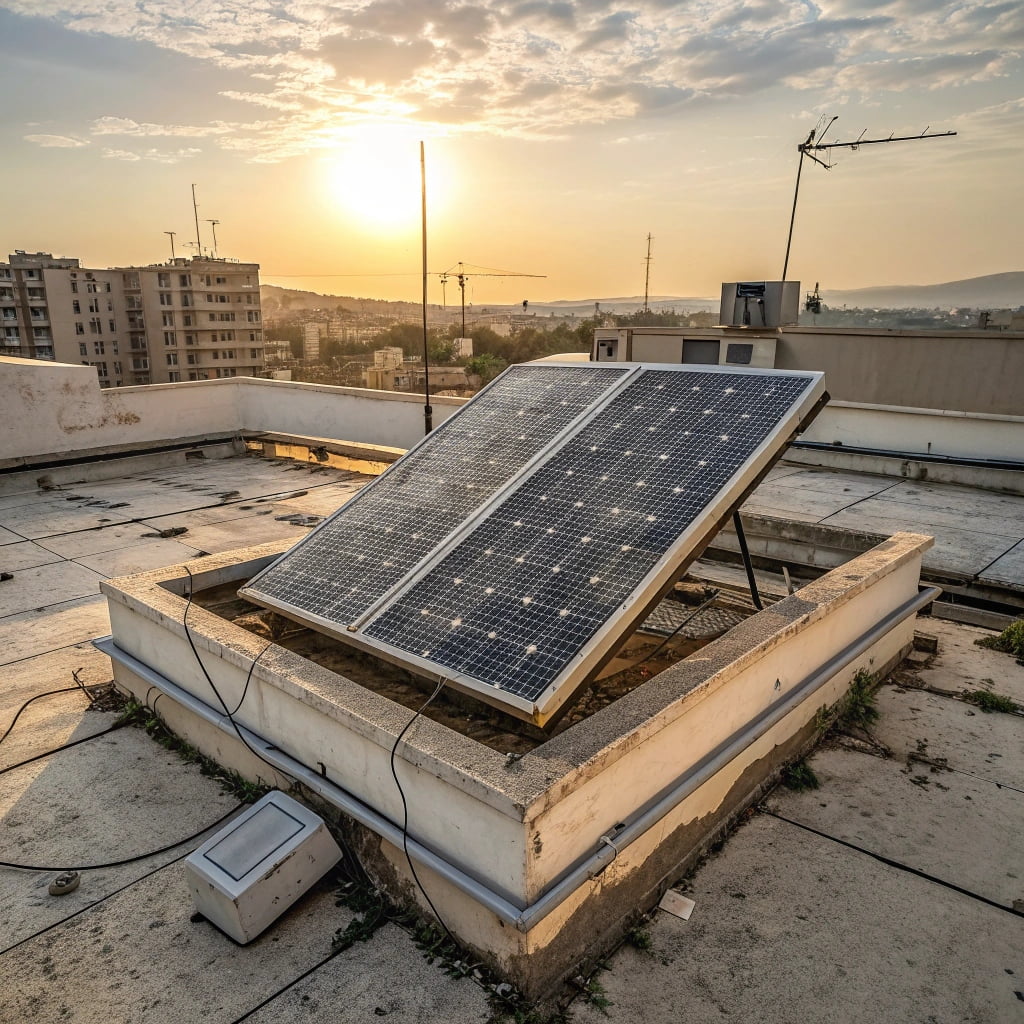
Absolutely not. Environmental factors like local sun hours, temperature, and potential for soiling (snow, dust) are critical. Ignoring them is a guarantee that the system will either be undersized and fail, or oversized and overpriced.
When a client gives me a project location, the first thing I do is look up the local climate data. It's non-negotiable.
- Peak Sun Hours (PSH): As we discussed, this is the engine of your system. Using a national average is useless. You need the PSH for your specific city, in the middle of winter. A system for Miami will not work in Chicago.
- Temperature: Batteries hate extreme temperatures. In very hot climates, their lifespan is reduced, so we may need to oversize the battery slightly or use special heat-resistant cells. In very cold climates (below freezing), a standard lithium battery's ability to charge is severely limited. For projects in Canada or the northern US, we must use batteries with built-in heaters to ensure they can charge in winter.
- Soiling: Will the panel be covered in snow for weeks at a time? Is it a dusty, desert environment? These factors reduce the panel's output, and we must build that into our system loss calculations, often by increasing the panel size by an extra 10-15% as a safety factor.
Conclusion
Calculating solar and battery size is a logical process, not a guess. By starting with your load, applying a 3-day autonomy standard, and using local environmental data, you can design a reliable and cost-effective system. The key is to avoid shortcuts—every climate is different, and every project deserves a tailored approach that balances performance, safety, and budget. With the right calculations, you’ll end up with a solar street light system that works year-round, even when the weather turns bad.