Struggling to find solar lights that are actually bright? You buy "super bright" lights only to find your yard is still dark. It feels like a waste of money.
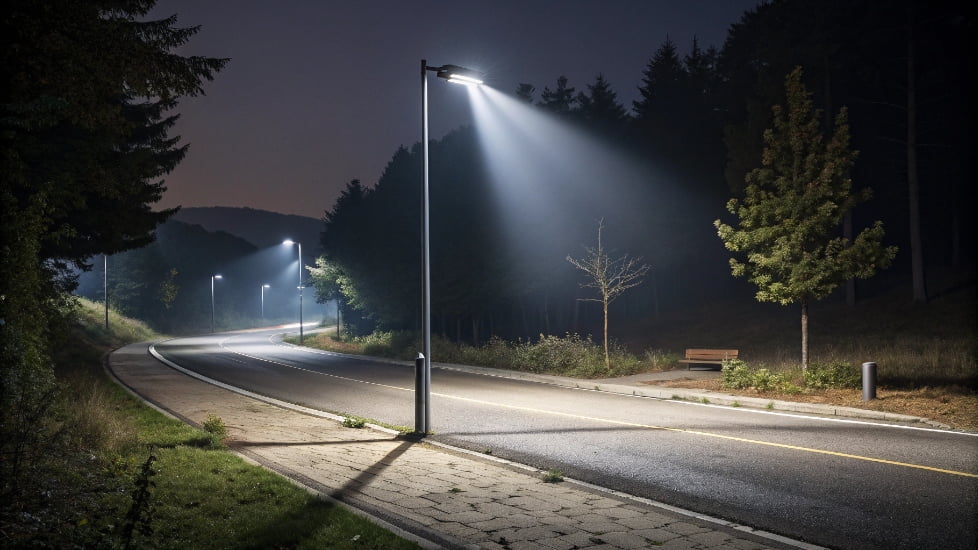
The brightest solar lights are typically split-type systems. These have a separate, large solar panel and a high-capacity battery that can power a high-lumen LED fixture. For maximum brightness, always prioritize high lumen output over just wattage, and ensure the system components are balanced.
I’ve spent years in the street lamp industry, from the factory floor to running my own company. I’ve seen it all, and I know how confusing it can be to sort through the technical jargon. You just want a light that works well. Now that you know the secret is in the system type, you're probably wondering what all those terms really mean for your backyard or driveway. Don't worry, I'm here to break it all down. Let's dig deeper so you can feel like an expert and choose the perfect bright light with confidence.
What Makes Solar Lights Bright?
You see "high power" on the box, but the light is disappointing. It's frustrating to compare options when you don't know what truly creates powerful illumination. Let's decode the specs together.
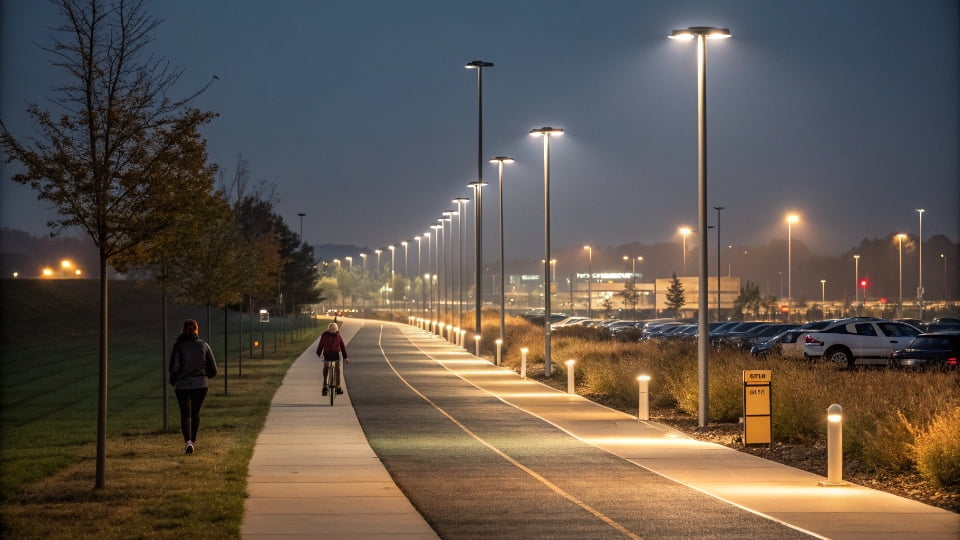
A solar light's brightness comes from its lumen output. This is powered by a balanced system: a high-capacity battery to store energy and a powerful solar panel to collect it efficiently. A bright LED needs a strong support system to shine its brightest all night long.
When I first started, I thought a bigger bulb meant a brighter light. Simple, right? But it's more complex than that. A solar light is a complete power system in miniature. My friend Bennett, an engineer with over a decade of experience, once told me, "Kathy, a bright LED is useless if the battery dies in two hours." He was absolutely right. The entire system has to work in harmony. [3] A solar light is primarily made up of five key parts: the solar panel, the light source (usually LED), the controller, the battery, and the pole or fixture. [3] Let's look at the crucial components that create that brilliant glow you're after.
It's a System, Not Just a Bulb
True brightness is the result of several parts working together perfectly. If one part is weak, the whole system suffers. This is why some cheap lights with "100W" bulbs are dimmer than a quality 20W light. The 100W bulb is likely underpowered by a tiny panel and battery. Here is what you need to look for:
| Component | What it Does | What to Look For (for brightness) |
|---|---|---|
| LED Light Source | Produces the light. | High Lumen (lm) Output: This is the true measure of brightness. Watts measure energy use, not light output. |
| Battery | Stores the energy collected by the panel. | High Capacity (Ah or Wh): A bigger capacity means the light can stay on longer at full brightness. Lithium batteries are more efficient than older gel types. [6] |
| Solar Panel | Converts sunlight into electricity. | High Power (Wp): A higher wattage panel charges the battery faster and more effectively, even on overcast days. |
| Controller | Manages energy flow from the panel to the battery and light. | Efficient Charging: An MPPT controller is more advanced and can get up to 30% more energy from your panel than a basic PWM controller. |
Think of it like a bucket (the battery) being filled with a hose (the solar panel) to water a plant (the LED light). You need a wide hose and a large bucket to give your plant plenty of water all night long. A mismatch, like a huge bucket with a tiny hose, just won't work effectively. This balance is everything.
Where to Find the Brightest Solar Lights?
The market is flooded with options, from small garden stakes to huge street lights. It's easy to get lost in the sea of choices and end up with the wrong light.
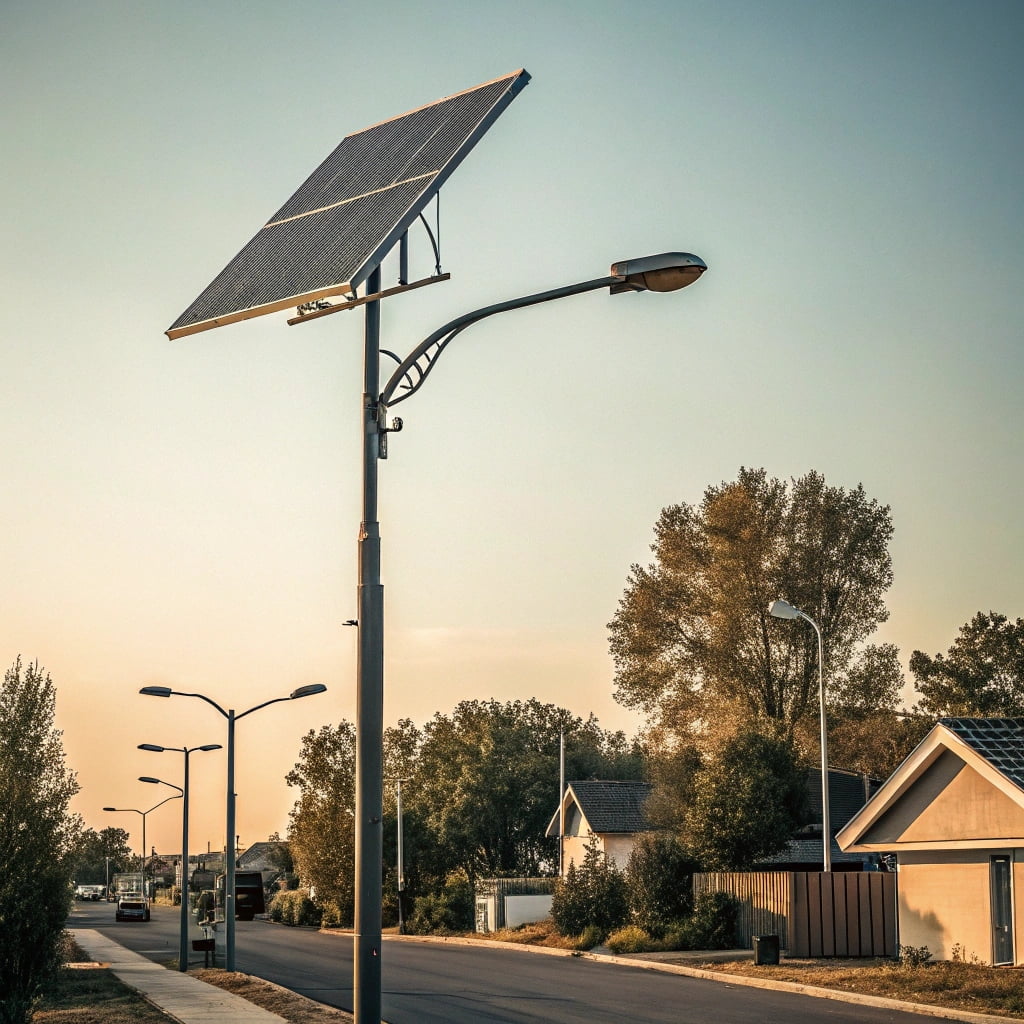
For maximum brightness, you should look for split-type solar lights. These systems separate the panel from the light, allowing you to use much larger components and position the panel for perfect sun exposure. They are the best choice for lighting large, important areas. [1]
Based on their physical structure, solar lights can be classified into three main types: all-in-one, two-in-one (or semi-split), and split-type lights. [1] I learned early on that choosing the right *type* of light is the most important decision. Each is designed for a different job. Let me walk you through them so you can find the perfect match for your needs.
All-in-One Lights: Convenient but Compromised
These lights integrate the solar panel, battery, and LED into a single housing. [2] Their biggest advantage is that they are incredibly easy to install, with no wires to connect. [2] However, this convenience comes at the cost of brightness. The solar panel is fixed on the back of the light, which severely limits its charging efficiency. [2] To light your path, the fixture must point down, but the panel might need to be angled at 30-45 degrees to catch the most sun, especially in mid-latitude regions. [2] This mismatch can reduce power generation by half or more. Also, because everything is crammed into one small body, the panels and batteries are small, limiting the power available for the light. They are great for small paths, gardens, or residential communities, but not for serious illumination. [4]
Two-in-One Lights: A Good Balance
This design is a smart compromise. The battery and LED are in the light fixture, but the solar panel is separate. [5] This is a huge improvement over the all-in-one design because you can angle the solar panel directly at the sun while pointing the light exactly where you need it. Installation is still simple, usually just one cable connecting the panel to the light. [5] These lights offer a wide range of power options, from 20W to 60W, making them versatile enough for many applications, from a large yard to a rural road. [5]
Split-Type Lights: The Brightness Champions
This is the original and most powerful design for solar lighting. [1] The solar panel, battery box, and light fixture are all separate components. This separation is their superpower. It allows you to use the largest possible solar panel and a massive battery, which means you can power an extremely bright LED light for 12 hours a night, with energy to spare for several rainy days. You can mount the panel on the roof or high on a pole facing south for maximum sun, while placing the light fixture and battery wherever they are needed. This is the design we use for major projects like main roads and large commercial lots because it offers the highest performance and reliability. [1]
Conclusion
Choosing the brightest solar light means looking past marketing hype. Focus on high lumens, a balanced system, and picking the right type—like a split system—for powerful, reliable outdoor lighting. By understanding how each component works together and selecting the design that fits your needs, you’ll avoid the frustration of dim lights and invest in a solution that truly illuminates your space.