The History and Dimensions of Street Lights: From Ancient Flames to Modern Standards
Before modern street lights illuminated our paths, cities were plunged into darkness after sunset. Early travelers faced treacherous journeys through pitch-black streets, risking robbery, injury, and disorientation without reliable illumination.
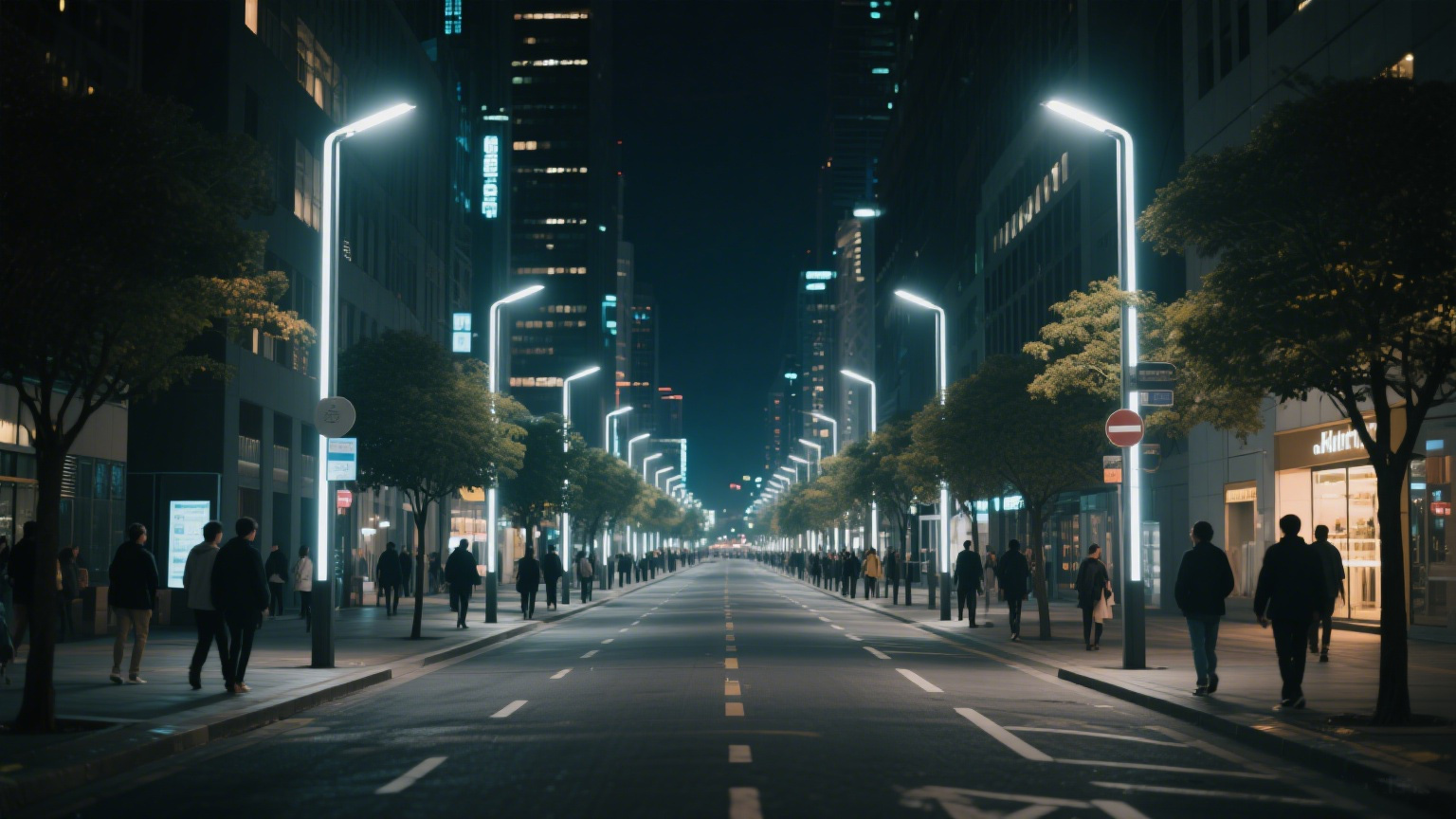
Before electric street lights, cities used various lighting methods including fire baskets with burning wood, oil lamps with animal fat, gas lamps burning coal gas (introduced in the early 1800s), arc lamps (1870s), and finally incandescent electric lights in the late 19th century. Early lamplighters manually lit and extinguished these lights daily.
The evolution of street lighting parallels humanity's technological advancement. Let's explore not only what came before our modern street lights but also examine the technical specifications of today's lighting systems, including their standardized dimensions.
What Is the Average Height of a Street Light?
When designing roadway illumination, proper pole height directly impacts visibility, coverage area, and safety for all road users.
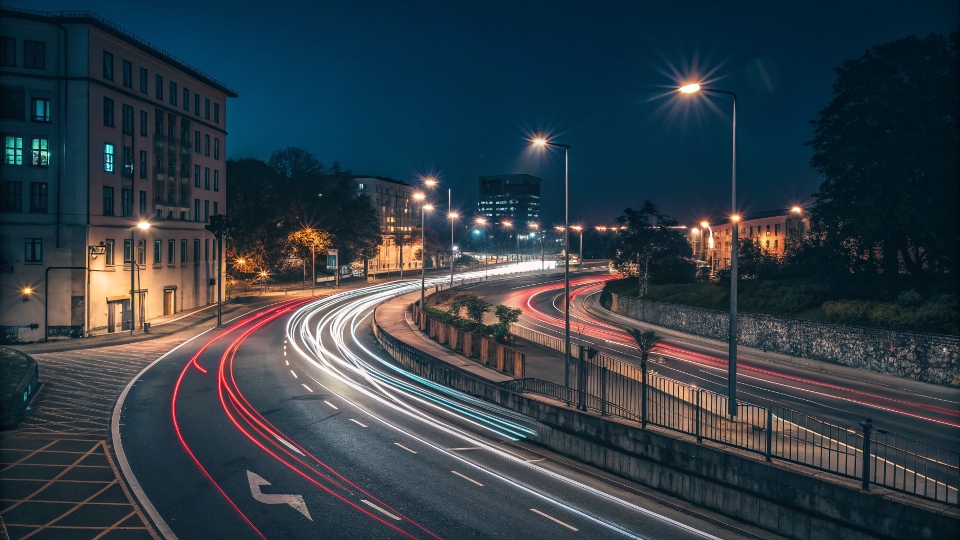
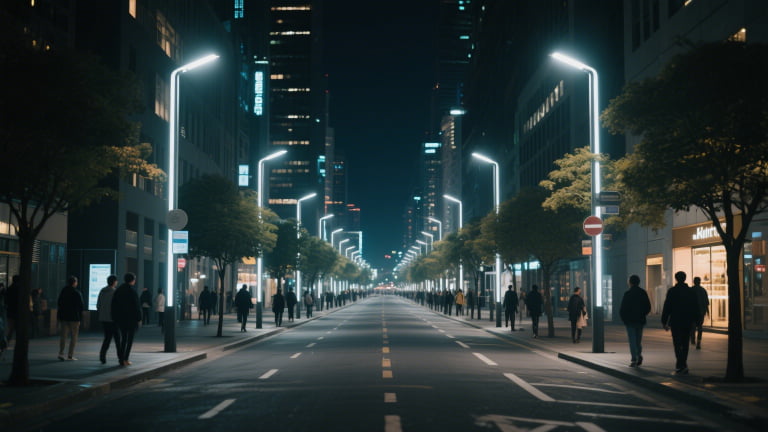
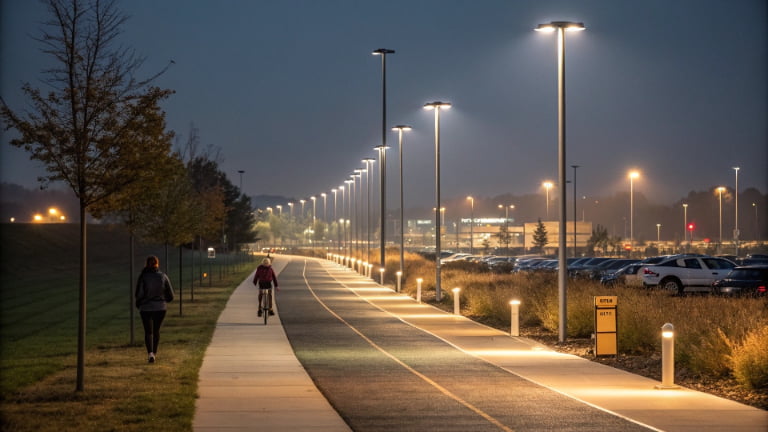
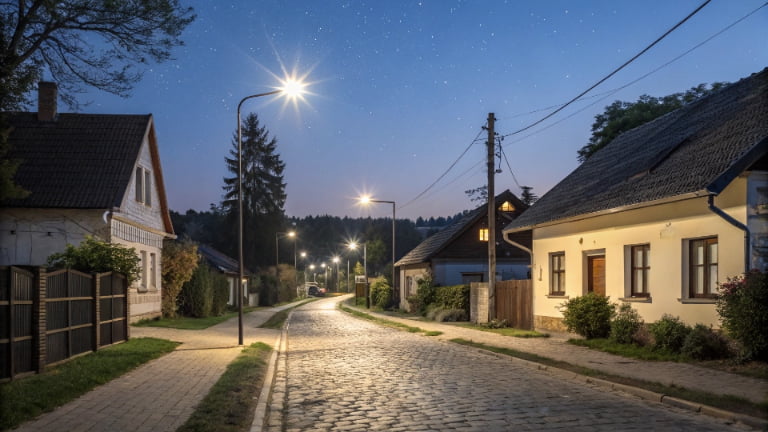
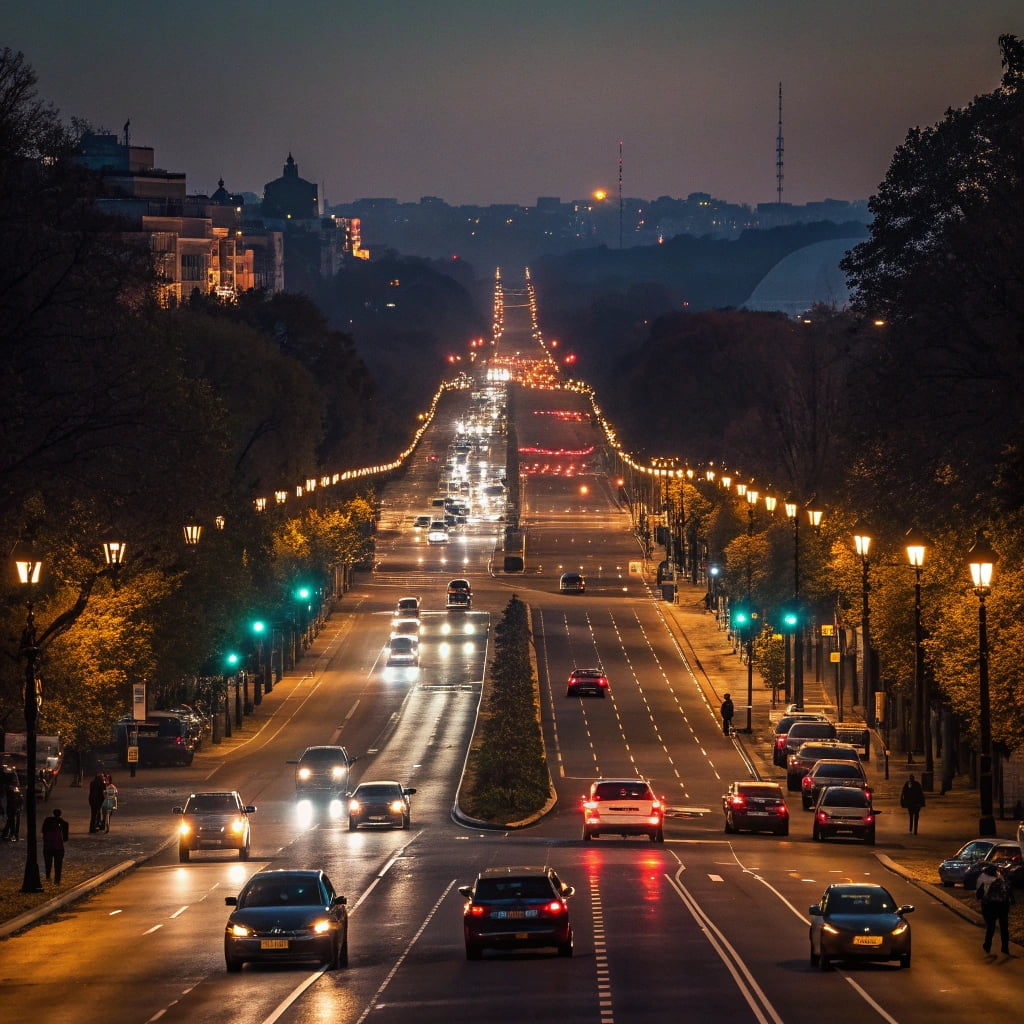
The average street light height ranges from 9-14 meters (30-45 feet) for major roadways and highways, while residential street lights typically stand 7-9 meters (23-30 feet) tall. Light pole height correlates with road width and classification, with taller poles used for wider, busier streets.
Street light heights aren't arbitrary—they're carefully calculated based on multiple factors. The primary consideration is achieving optimal light distribution across the road surface. For solar-powered street lights, height and orientation significantly affect system performance.
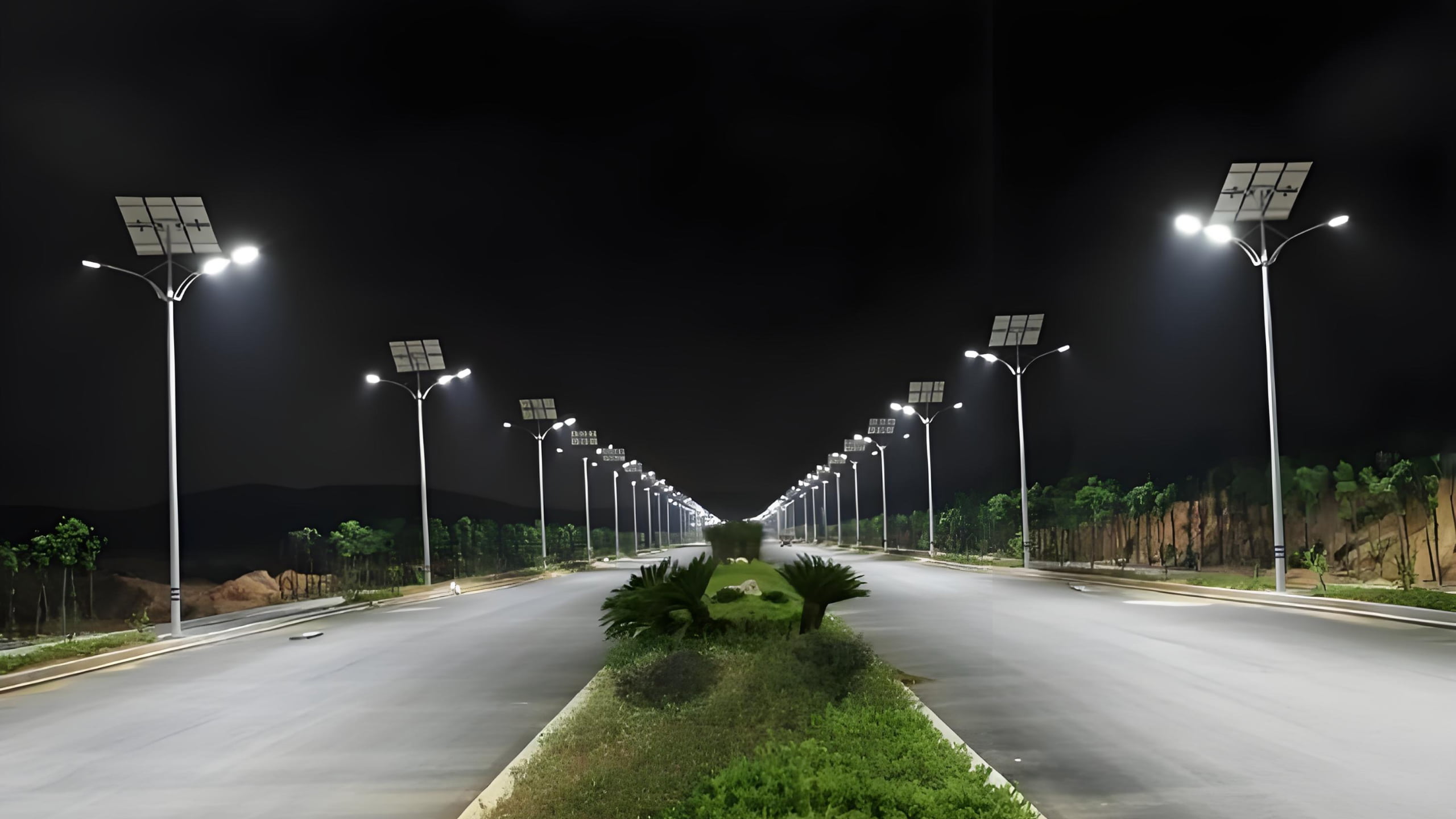
Solar street light designs include one-piece integrated systems, two-body systems, and split systems. Each configuration places different constraints on installation height. Integrated one-piece systems typically maintain about 15° tilt for their solar panels, which impacts their optimal mounting height relative to traditional street lights. [4]
The orientation of the road itself affects lighting placement. On east-west roads, lights can be positioned to allow solar panels to face south (in the Northern Hemisphere), while north-south roads force panels to face east or west, reducing charging efficiency. [3] This consideration can influence pole height decisions for maximum effectiveness.
Split-system solar lights offer more flexibility in height adjustments since their components are mounted separately, allowing the light fixture to be positioned at the ideal height without compromising solar panel orientation. This separation of components enables better optimization of both lighting coverage and solar charging efficiency.
What Is the Standard Size of a Street Light?
Beyond height, understanding the standard dimensions of street light fixtures helps ensure proper illumination coverage and aesthetic consistency.
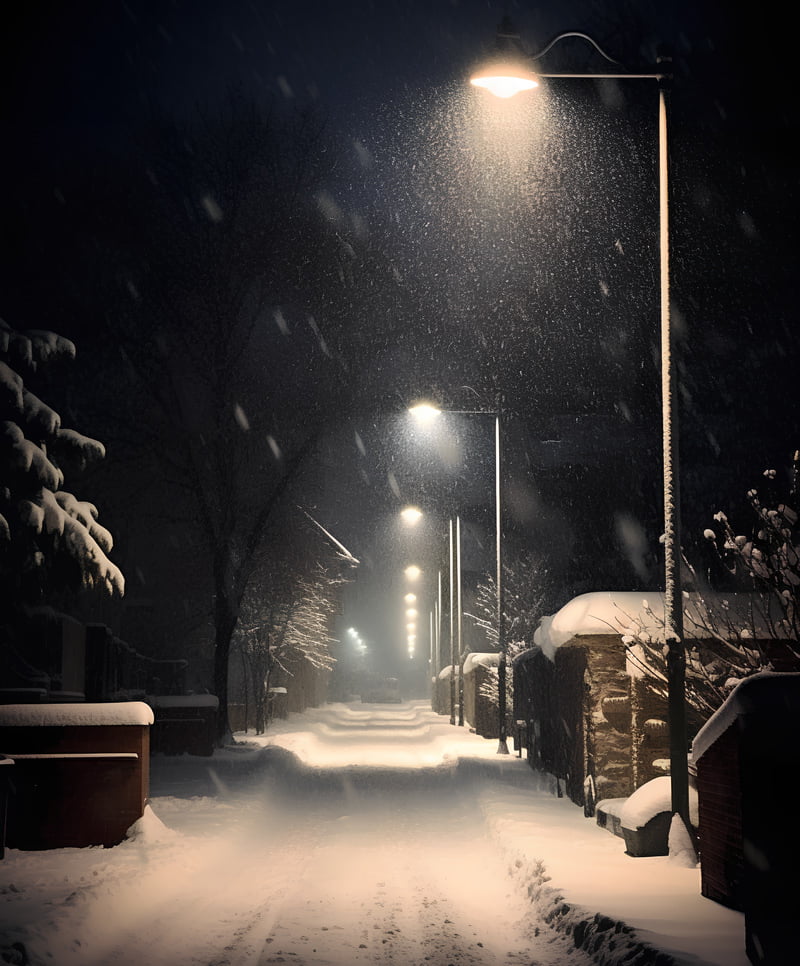
Standard street light fixture sizes vary by application, with highway lights typically measuring 60-120 cm (24-48 inches) in length, residential fixtures averaging 40-60 cm (16-24 inches), and decorative urban lights ranging from 30-50 cm (12-20 inches). The fixture size directly correlates to the light output needed for the specific application.
For solar street lights, fixture size often depends on integration level with other components. In all-in-one integrated systems, the fixture size is constrained by the need to incorporate solar panels, batteries, and control systems in a single housing. This integration creates certain limitations in fixture design and light output potential.
All-in-one systems typically have smaller fixtures due to weight and wind load considerations, as they must support the combined weight of all components. These systems often have lower light output since their solar panels are limited in size by the fixture dimensions. The fixed panel angle (typically around 15°) affects charging efficiency, especially in mid-latitude regions where optimal angles range from 30-45°. [3]
Two-body systems separate the solar panel from the light fixture, allowing for larger light fixtures while maintaining a manageable weight distribution. This design enables better light coverage with fixture sizes comparable to traditional street lights while still benefiting from solar power generation. [4]
Split systems offer the most flexibility in fixture sizing since each component is mounted separately. The light fixture can be sized appropriately for the illumination requirements without being constrained by the need to incorporate other system components. This allows for optimized fixture design focused solely on lighting performance.
How Tall Is a Street Stop Light?
Traffic signal heights follow different standards than street lights since their visibility requirements differ significantly.
Street stop lights (traffic signals) are typically mounted 3-6 meters (10-20 feet) above the road surface, with urban intersections using lower heights (3-4.5 meters/10-15 feet) and highway intersections using taller mounts (4.5-6 meters/15-20 feet). The bottom edge of the signal housing must maintain a minimum clearance of 3 meters (10 feet) above the road.
Traffic signals operate differently from street lights, with distinct control systems and power requirements. While street lights primarily work through light-controlled activation and time-controlled deactivation, traffic signals follow programmed timing cycles or responsive detection systems. [1]
Unlike many modern street lights that incorporate solar power, traffic signals typically rely on constant grid power to ensure reliability. Some newer installations do incorporate battery backups to maintain operation during power outages, similar to how solar street lights utilize battery storage for nighttime operation. [1]
The height of traffic signals represents a balance between visibility for approaching vehicles and clearance for larger vehicles passing beneath them. This is particularly important at intersections where large trucks and emergency vehicles need sufficient clearance while maintaining optimal visibility for all road users.
How Tall Is a Light Standard?
The term "light standard" generally refers to the complete street light assembly, including the pole and fixture, with height specifications that vary based on application and environment.
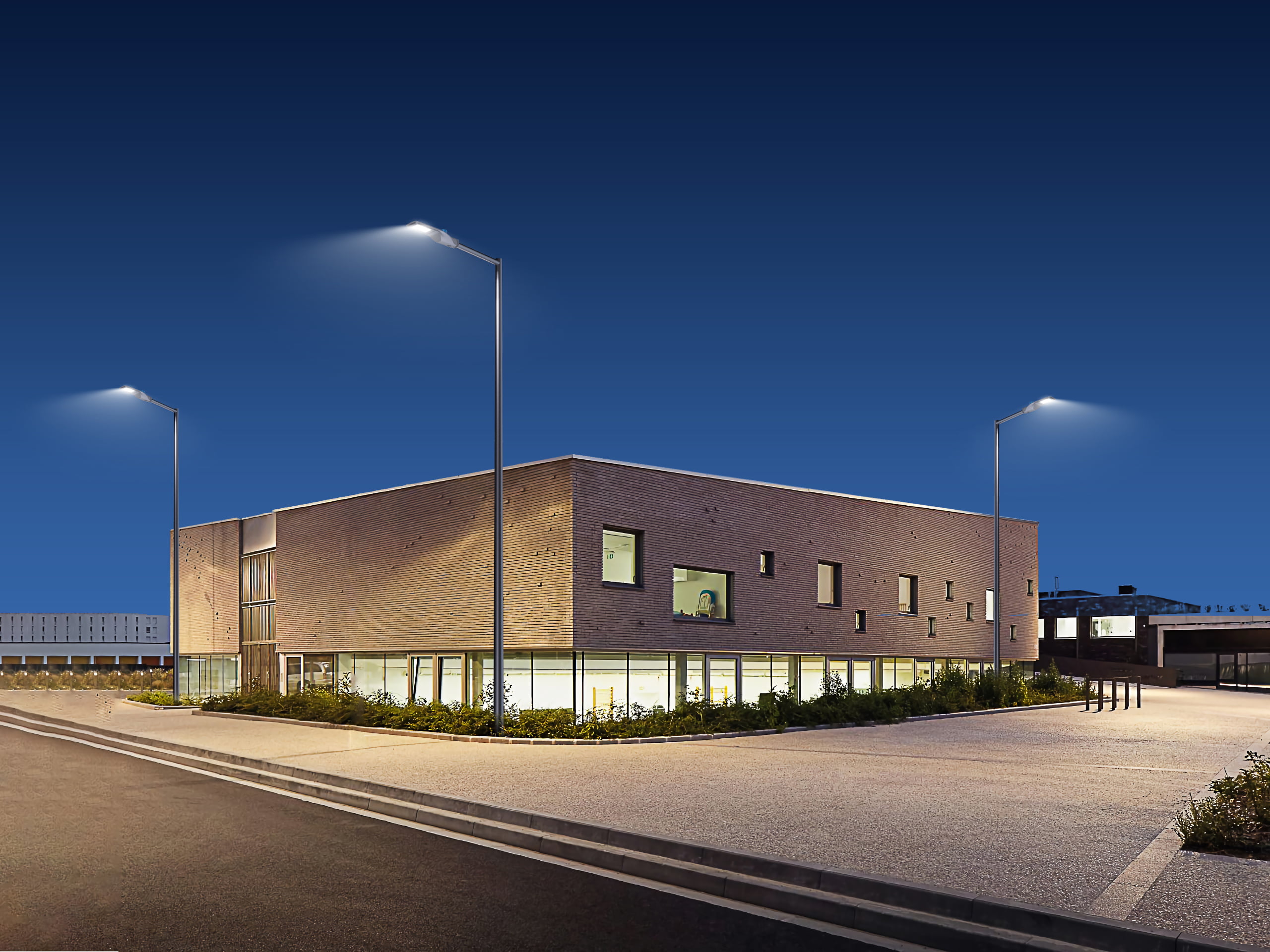
Light standards (complete pole and fixture assemblies) typically range from 3-14 meters (10-45 feet) tall. Pedestrian-scale light standards in parks and walkways measure 3-5 meters (10-16 feet), residential streets use 7-9 meter (23-30 foot) standards, while major roadways employ 9-14 meter (30-45 foot) standards.
The height of light standards directly impacts their coverage area and illumination pattern. For solar-powered systems, height also affects the physical structure requirements, as taller poles must withstand greater wind loads, especially when supporting solar panels that increase the surface area exposed to wind.
Solar street light systems require careful balance between pole height (for optimal lighting) and structural considerations. For wind-solar hybrid systems, where both solar panels and wind turbines are mounted on the same pole, height becomes even more critical as wind turbines need to be positioned high enough to capture sufficient wind energy. [6]
These hybrid systems typically place wind turbines at the top of the pole (often extending the total height to 12-15 meters/40-50 feet), with solar panels mounted below, and finally the light fixture at the standard height appropriate for the road classification. The additional height requirements for wind turbines contribute to higher costs, as poles must be stronger with larger diameters and thicker walls to withstand increased wind loads. [6]
Conclusion
Before modern street lights, cities relied on fire baskets, oil lamps, and gas lighting, each with significant limitations. Today's street lighting follows standardized heights ranging from 3-14 meters depending on application, with fixture sizes and configurations carefully designed to balance illumination needs with energy efficiency and structural requirements.