Solar Panel Tilt Angle: Maximize Performance for Your Solar Lighting System
You're designing a solar lighting system and see panels installed at all different angles. You're worried that if you just lay it flat or pick the wrong angle, you'll cripple your system's performance and waste a significant amount of money on a system that fails when you need it most.
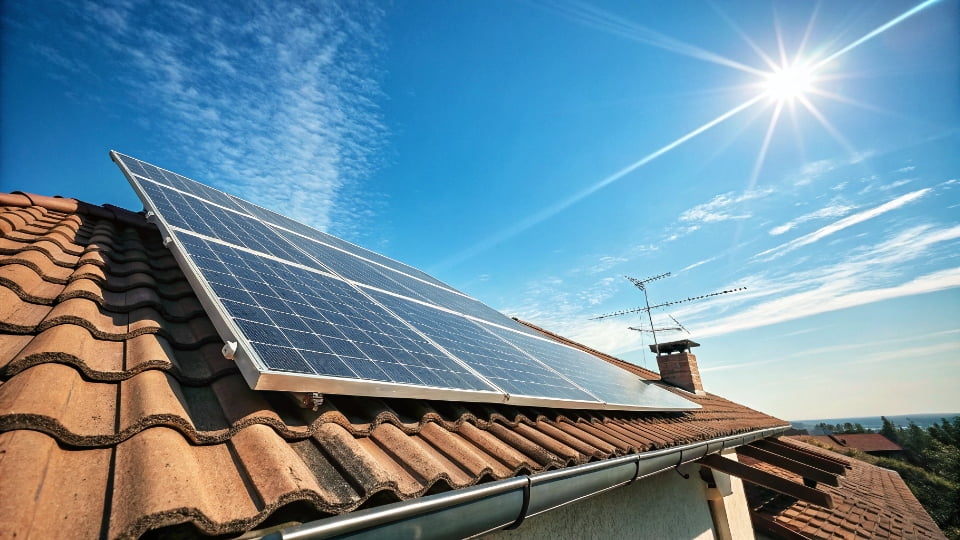
The optimal angle for a bulk solar panel is generally equal to your location's latitude. This simple rule of thumb maximizes the panel's exposure to the sun throughout the year, dramatically increasing its energy output compared to a flat installation.
When we talk about "bulk" solar panels, we're referring to the standalone panels used in high-performance, split-type systems, as opposed to the panels that are built into the housing of an all-in-one fixture. My time in the factory and in the field has taught me that the ability to independently control this angle is one of the biggest advantages of a split system. It’s the difference between a system that barely survives and one that thrives, especially during the dark days of winter.
Bulk Solar Panels: Flat or Tilted?
You see some panels, especially on all-in-one lights, that are almost flat. It looks simpler and probably costs less to install. You're tempted to do the same, but you have a nagging feeling that you're leaving a lot of energy on the table.

Tilted panels are vastly superior to flat ones. A properly tilted panel can generate two to three times more energy than a flat panel, especially in winter. It also stays cleaner and sheds snow, making it far more reliable.
The reason for this dramatic difference is simple physics. A solar panel generates the most power when the sun's rays hit it at a perpendicular, 90-degree angle. Because the sun is lower in the sky during winter (when you need the power most), a flat panel presents a very poor angle to the sun, causing most of the light to glance off. A tilted panel, however, can be aimed directly at the low winter sun.
From my own engineering documents, I know that all-in-one lights, with their panels fixed at a shallow 15-degree angle, have very low charging efficiency in most parts of the world. For a location in the mid-latitudes (like most of the US or Europe), the ideal angle is closer to 45 degrees. The performance gap isn't small.
| Panel Installation | Winter Energy Generation | Self-Cleaning | My Professional Advice |
|---|---|---|---|
| Flat (or <15° Tilt) | Very Poor (Up to 70% loss) | Poor (Dirt and water pool on the surface) | Unacceptable for any mission-critical system. |
| Tilted to Latitude | Excellent | Excellent (Rain washes dirt away, snow slides off) | This is the professional standard for reliability. |
Choosing to install a panel flat is choosing to handicap your entire system from day one.
Is It Worth Tilting Bulk Solar Panels?
You understand tilting is better, but the mounting brackets cost extra money and it adds a step to the installation. Is the performance gain really worth the additional upfront cost and effort?

Yes, absolutely. The small, one-time cost of tilt-mounting hardware is the single most cost-effective investment you can make in a solar lighting system, paying for itself many times over in increased performance and reliability.
Thinking that you can save money by installing a panel flat is a classic false economy. The reality is, if you don't tilt the panel, you will have to spend far more money elsewhere in the system to make up for the terrible performance. Let's look at the real cost of building a reliable system.
Imagine you need to power a 40-watt light:
The cost of the adjustable mounting bracket might be $50. But the savings from needing a smaller panel and a smaller battery could be $200 or more. You come out ahead on day one, and you get a system that actually works through the winter. This flexibility is precisely why we use split systems for any large or critical project; we can't afford the limitations of an integrated light where the panel angle is compromised by design.
Conclusion
Tilting your bulk solar panels to match your latitude is not an optional tweak; it is a fundamental requirement for a reliable and cost-effective system. It's a small investment that unlocks the full potential of your solar array, ensuring maximum energy generation even in winter months, better self-cleaning performance, and reduced overall system costs by avoiding oversized components. For any solar lighting project where reliability matters, proper panel tilt is non-negotiable.