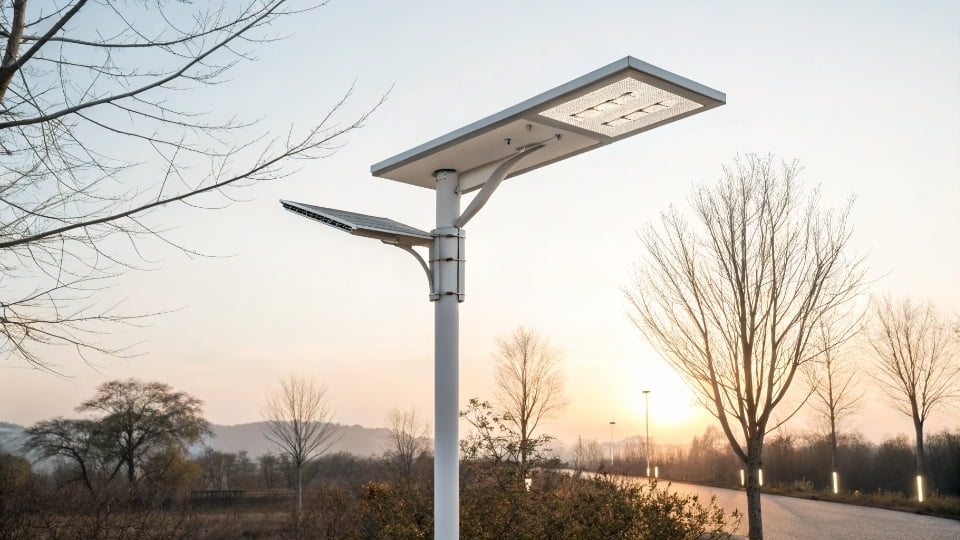
Choosing the right battery feels complicated. You worry about longevity and replacement costs. Get the wrong one, and you're stuck with frequent, expensive maintenance.
The cycle life of a solar battery depends entirely on its type. A typical gel battery offers around 300 cycles for a 3-5 year lifespan. In contrast, a modern lithium battery provides about 1000 cycles, lasting 8-15 years, making it a superior long-term, low-maintenance choice [5].
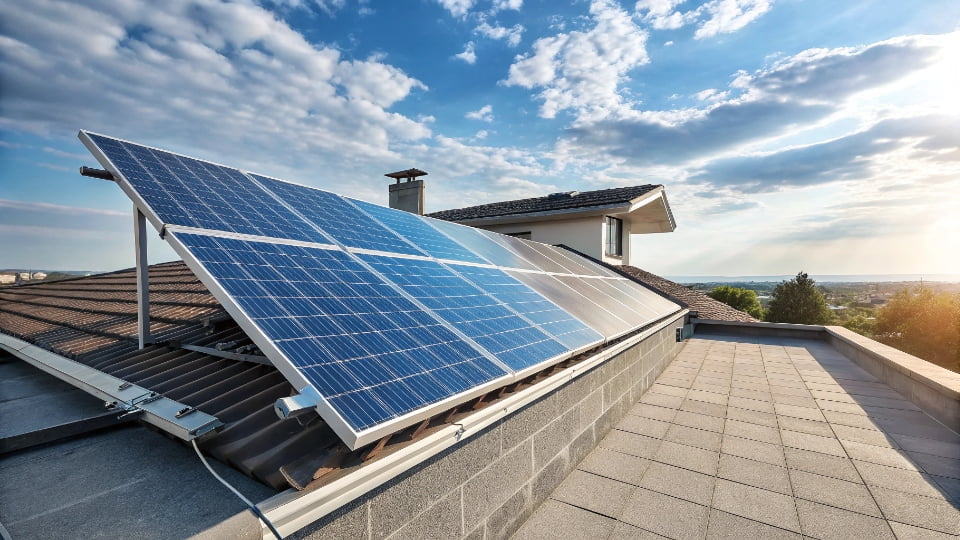
Understanding battery life is a critical first step. But it's just one part of a bigger story. The technology behind solar lighting is advancing so quickly, and that's why it has become such a hot topic globally. It's more than just a battery; it's a complete system that is changing how we think about light. Let's explore why everyone is so interested in these systems.
Why is the Entire World Talking About Solar Lights?
You see solar lights appearing everywhere, but you might not understand the buzz. The technology seems to change so fast, it's hard to keep up. You're probably wondering if this is just a passing trend or a genuine lighting revolution.
People are talking about solar lights because they are a convenient, cost-effective, and versatile technology that has evolved rapidly in just the last decade [2]. From early split systems to modern all-in-one designs, they offer smart solutions for a wide range of lighting needs, with more innovations still coming [3].
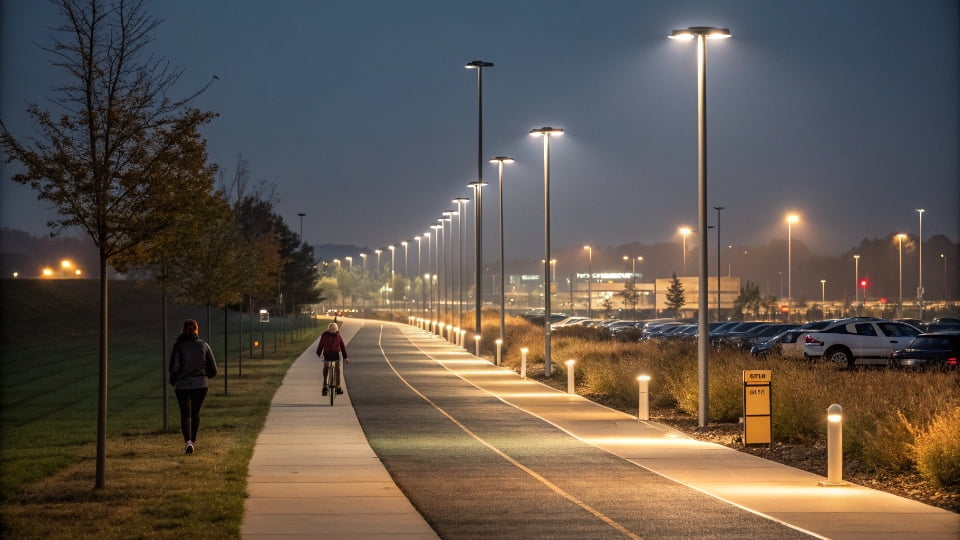
When I first started in this industry, solar lights were much different. The original designs, which we call split-type systems, were the pioneers [3]. But they had many separate parts, which made installation complex. The real game-changer came with the rise of lithium batteries. Because lithium batteries are so much smaller and lighter than the old gel batteries, we were able to create more integrated designs [5].
The Evolution of Design
The first big improvement was the "Two-in-One" light. This design integrated the battery, controller, and light source into a single housing, leaving only the solar panel separate [6]. This was a huge step forward. It reduced the number of connections from six wires down to just two, which dramatically cut down on installation errors [6]. Following that, the "All-in-One" light took it even further by integrating every single component, including the solar panel, into one unit [1]. This made installation as simple as mounting a single fixture on a pole.
Smart and Versatile Solutions
This evolution in design has made solar lights incredibly versatile. Today, we have options for almost any application, from small courtyard lights to powerful lights for main roads [6]. But it's not just about the hardware. The controllers inside these lights are also getting smarter. Most systems now use light control to turn on at dusk and time control to manage brightness through the night [3]. We can program them to be at 100% brightness during peak traffic hours and then dim down in the middle of the night to conserve energy, before brightening again for early morning commuters [3]. This intelligence ensures we get the light we need while saving as much power as possible.
How Much Could Solar Street Lighting Save You?
You already know that solar power saves on electricity bills, but what about the total cost of a project? Hidden expenses are a major concern for any engineer or project manager. You need to see the full financial picture before you can make a confident investment.
Solar street lighting saves you money in several key areas. The most significant savings come from completely eliminating the need for trenching and grid connection. You also save on materials, installation labor, shipping, and of course, ongoing electricity bills, making it a highly economical choice [1][6].
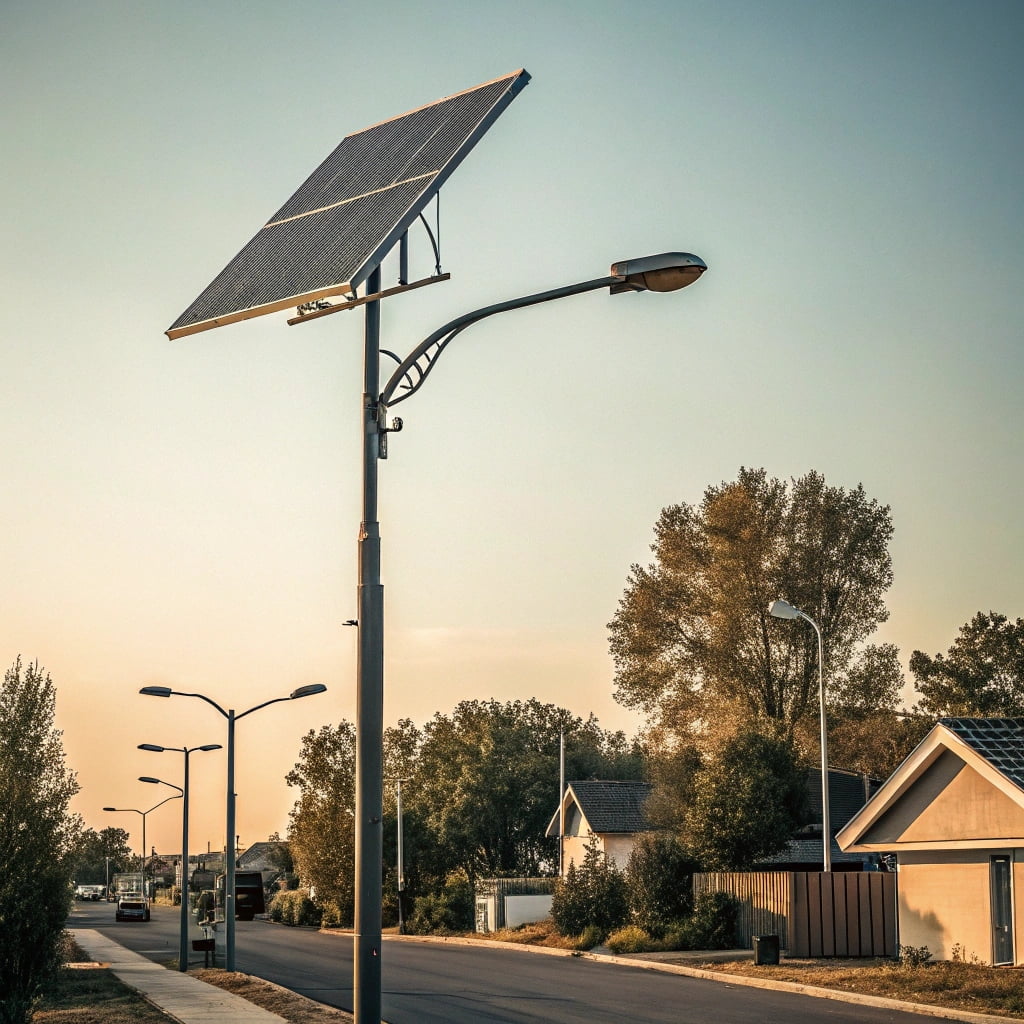
Over my years helping clients, I've seen firsthand how these savings add up. The initial sticker price of a solar light might seem comparable to a traditional one, but the total project cost is often much lower. It all comes down to avoiding the expenses tied to connecting to the electrical grid. For a new installation, you don't have to pay for digging trenches, laying meters of expensive copper cables, and connecting to the grid. These costs can easily double the price of a traditional lighting project.
Breaking Down the Savings
Let's look at how different types of solar lights affect your budget. Integrated systems, which use lithium batteries, offer significant advantages over older split systems that used gel batteries.
| Cost Category | Split System (Gel Battery) | Integrated System (Lithium) | Your Savings |
|---|---|---|---|
| Material Cost | Higher due to a separate battery case [6] | Lower because of the integrated design | Reduces the bill of materials |
| Shipping Cost | Higher due to larger volume [1] | Lower due to compact, all-in-one design | Saves money on freight |
| Labor Cost | Higher due to complex wiring [5] | Lower due to pre-wired, simple connections [6] | Reduces installation time and costs |
Long-Term Operational Gains
Beyond the initial project savings, the long-term benefits are even greater. The most obvious is having a zero-dollar electricity bill [2]. But maintenance savings are also huge. A gel battery typically needs to be replaced every 3-5 years [5]. This means digging it up and paying for a new one. A lithium battery, however, lasts 8-15 years—nearly three times as long [4][5]. This drastically reduces the lifetime maintenance costs of the system, making it a smarter financial decision over the long run.
Why are Solar Lights Life-Enhancing?
A light is just a light, right? It’s easy to focus on the technical specs and costs and overlook the wider impact. But we know that poor lighting affects safety, limits community activities, and creates a disconnect with our environment. A good lighting solution does more than just illuminate a space.
Solar lights enhance our lives by improving safety on dark roads, especially in rural areas that often lack standards [2]. They also offer greater convenience through simple installation and help create a cleaner environment by using renewable energy and non-polluting components like lithium batteries [4][6].
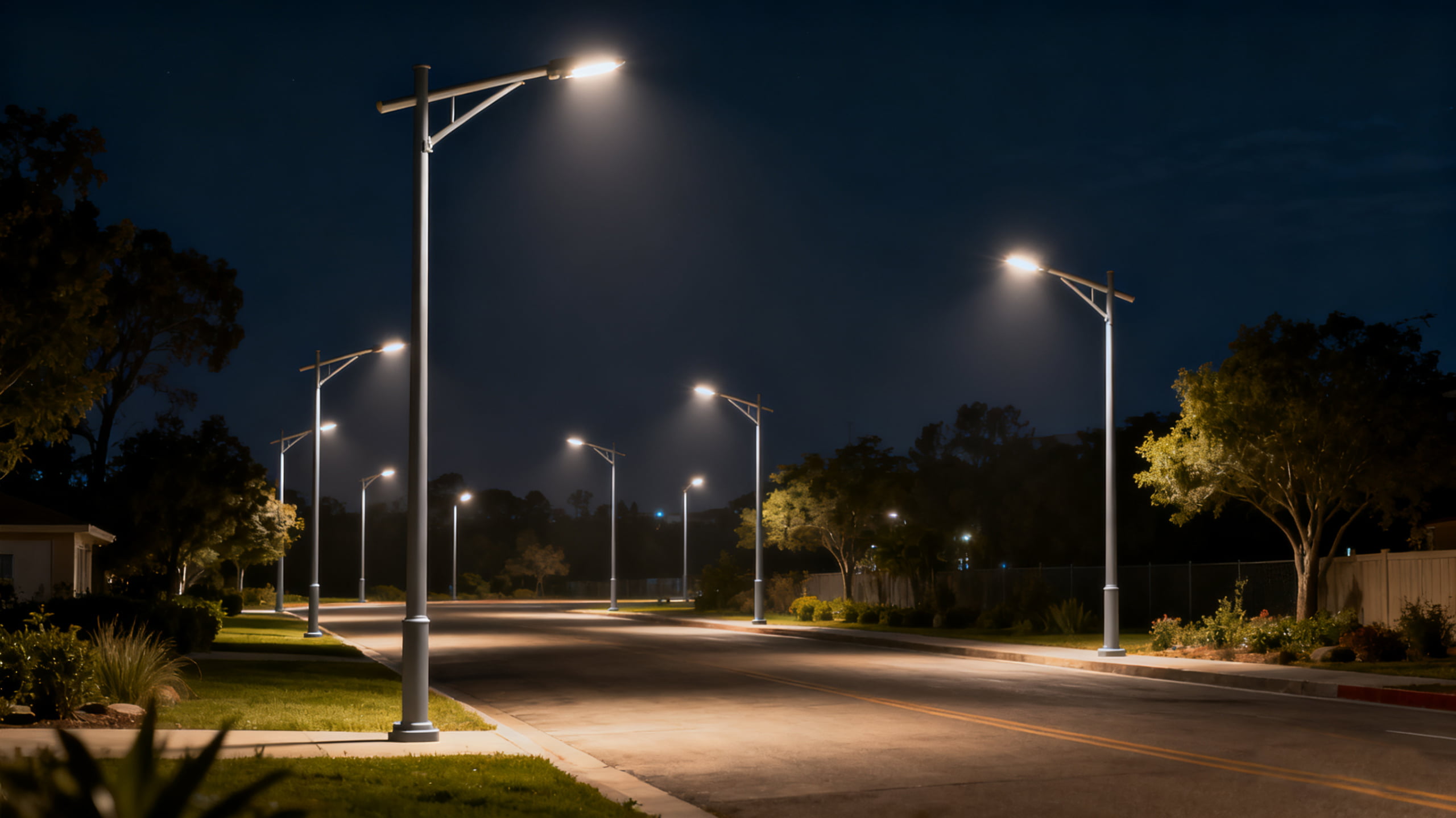
I believe the work we do goes beyond just selling products. We are providing a tool that improves quality of life. Because solar lights are independent of the grid, they can be installed anywhere light is needed, from a remote village road to a city park. This accessibility is what makes them so powerful.
Improving Safety and Building Community
In many rural areas, there are no official standards for road lighting [2]. This can make walking or driving at night dangerous. By installing off-grid solar lights, communities can instantly make their roads safer for everyone. When I work with clients on these projects, they often tell me that the lights do more than prevent accidents. They extend the day, allowing for evening markets, community gatherings, and for children to play safely outside after dusk. It brings people together and strengthens the community fabric.
A Greener Choice for a Better Planet
The environmental benefits are also a major factor. Of course, using solar energy is clean and renewable [2]. But the choice of components matters too. For years, the industry standard was gel batteries, which are a type of lead-acid battery. Lead is a heavy metal and a serious pollutant if it leaks into the soil or water [4]. We have a responsibility to handle and dispose of these properly. Modern lithium batteries, however, are non-polluting [4]. Choosing a system with a lithium battery isn't just a better technical decision because of its longer life; it's a more responsible choice for protecting our environment.
Conclusion
In short, understanding battery life is crucial. Modern solar lights offer incredible long-term performance, substantial cost savings, and enhance our lives by making our world safer, greener, and better connected.