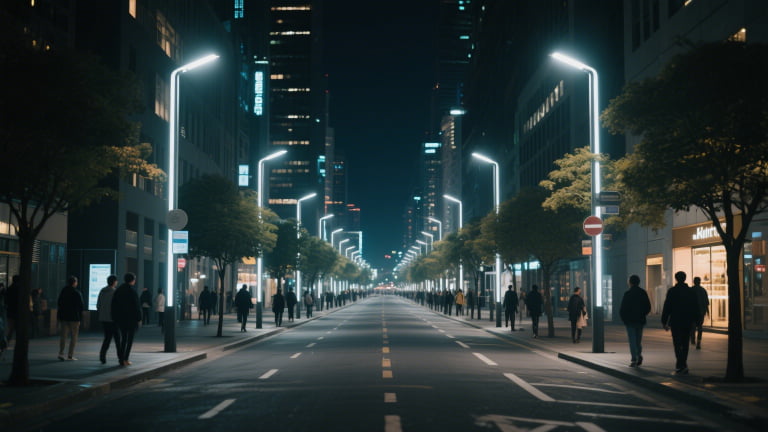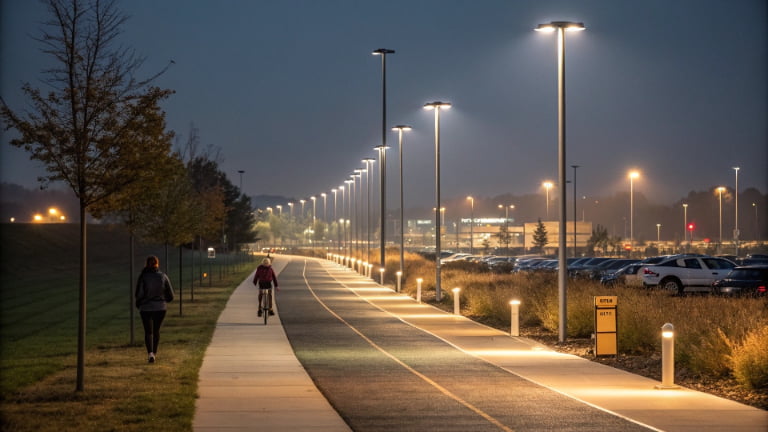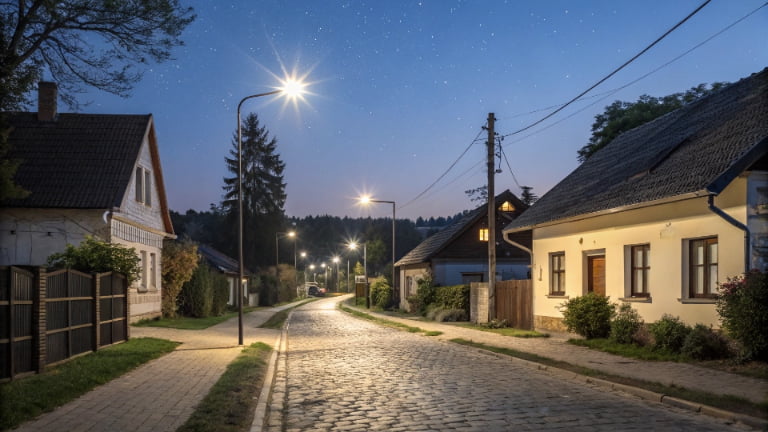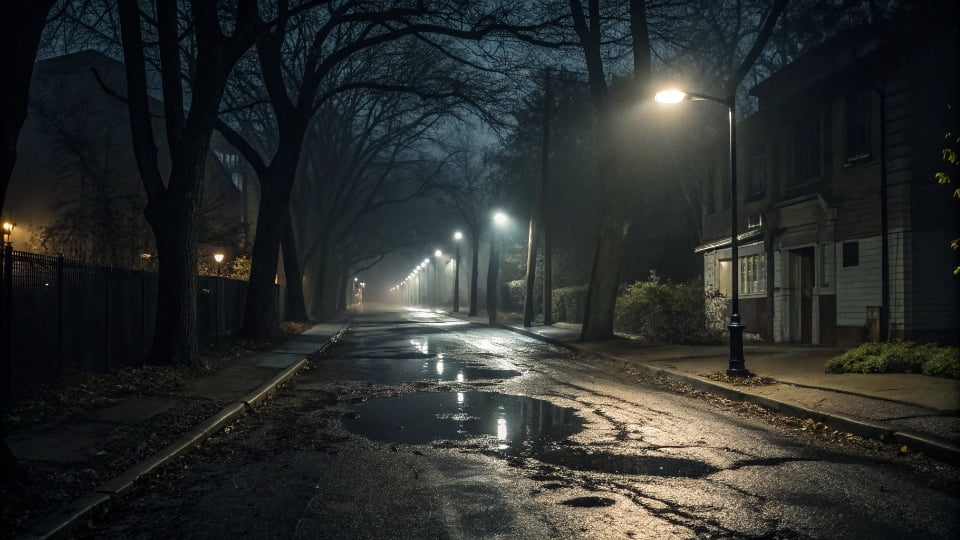
You're planning a lighting project and see the words "lamppost" and "streetlight" used everywhere. This gets confusing. You don't want to order the wrong parts and delay your project.
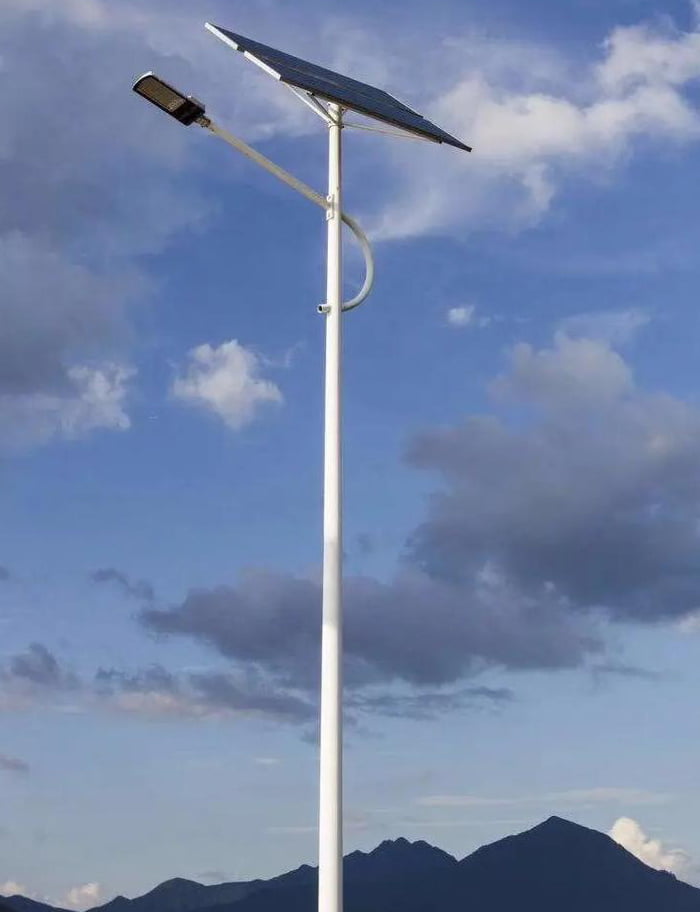
A lamppost is just the pole. A streetlight is the complete system: the pole, the light fixture, the power source, and all the hardware needed to provide illumination for a road [3]. Thinking of the lamppost as one component of a full streetlight system is the easiest way to remember it.
I’ve been in the street lamp industry for years, from the factory floor to running my own company, and this is one of the most common mix-ups I see. A client will ask for a price on a "streetlight," but what they really need is just the light fixture, or luminaire. Or they'll ask for a "lamppost" when they need the entire setup. Knowing the difference is the first step to making sure you get exactly what you need. Now that we've cleared that up, let's talk about the lamppost itself. It's much more than just a metal tube; its design is critical to the entire system.
What are the different types of light poles?
You see all kinds of lights on the road. Some have big separate panels, others have everything in one box. It’s hard to know which pole and system is right for your needs.
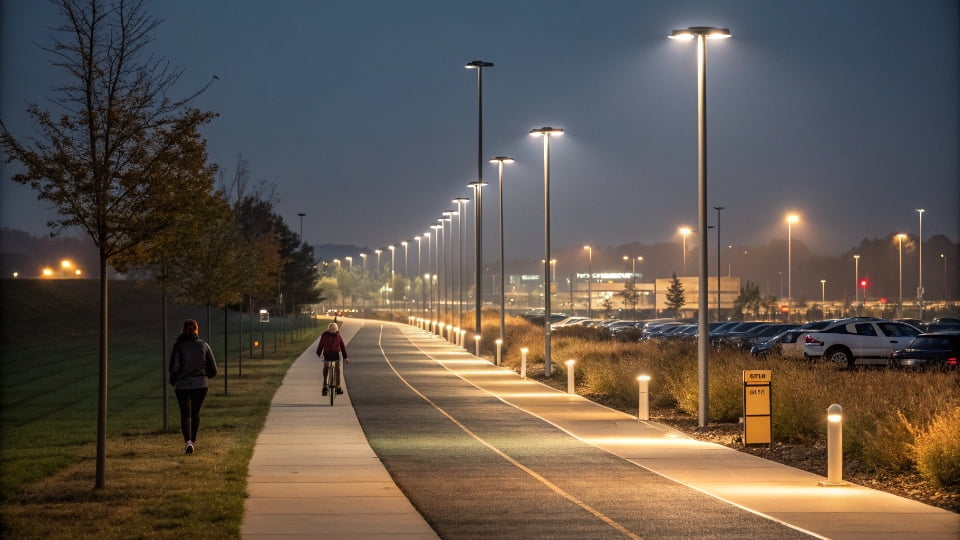
Light poles are designed to support different types of lighting systems. The main types are for split-type systems with separate components, integrated all-in-one systems, and special hybrid systems like wind-solar that need extra reinforcement to hold a turbine [1][2].
In my experience, the type of light pole you need is determined by the lighting system you choose. When solar lights first came out, they were all split-type systems [1]. This is still the best choice for big projects. But technology has evolved, and now we have more integrated options. My engineer friend Bennett always says, "The pole has to serve the system." He's right. You can't just pick a pole you like; you have to pick a pole that works with your light. Let’s look at how different systems use different pole setups.
Pole Setups for Different Systems
| System Type | Pole Characteristics & Requirements | Best Use Case |
|---|---|---|
| Split-Type | This is the most flexible system. The pole needs to support a separate solar panel on a bracket, a light fixture on an arm, and sometimes a battery box. It allows for very large and powerful components [1][5]. | Main roads, highways, and areas needing powerful, reliable light for many hours. This design allows for the biggest systems [5]. |
| All-in-One | These use a simpler pole. The light fixture, panel, and battery are all in one unit that mounts directly on the pole, often without a long arm [4]. It's very easy to install [4]. | Courtyards, small paths, parks, and residential areas where lighting demands are lower and ease of installation is important [2]. |
| Hybrid Systems | These require specialized poles. A wind-solar hybrid needs a pole strong enough to hold a wind turbine at the top [2]. A grid-hybrid system pole must accommodate internal wiring for city power, which adds complexity and cost [6]. | Areas with low sun but consistent wind (wind-solar) or projects retrofitting old grid-powered lights to save electricity (grid-hybrid) [6]. |
So, when you choose a light pole, you are really choosing a lighting system. For a simple garden path, an all-in-one system with a basic pole is perfect. For a major roadway, you'll need a heavy-duty pole designed for a powerful split-type system.
What are the components of light poles?
A pole seems simple, just a tube of metal. But getting the wrong hardware or missing a key part can ruin your installation. It's a frustrating and costly mistake.
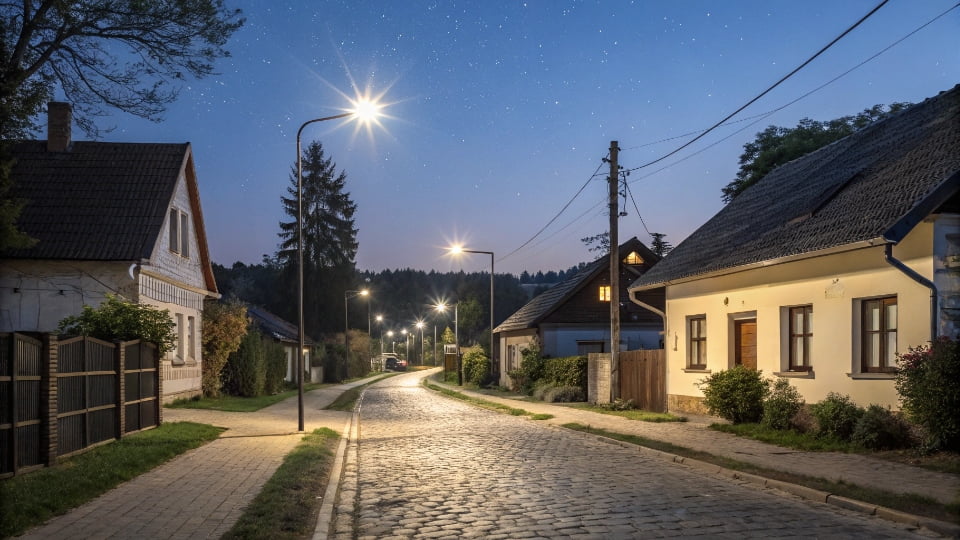
A complete light pole system consists of the pole shaft, a foundation kit with anchor bolts, a base plate, an arm to hold the fixture, and an access door. For solar poles, it also includes brackets for the solar panel and sometimes a battery box [3][5].
When I first started, I thought a pole was just a pole. But I quickly learned that the "hardware" is just as important [3]. I remember a client who ordered poles but forgot the anchor bolts. Their entire project was delayed for weeks while they waited for new foundation kits to ship. It was a tough lesson for them. To avoid that kind of headache, you need to know every piece of the puzzle. A light pole isn't a single item; it's a kit of essential parts that all have to work together.
Breaking Down the Pole
| Component | Function | Notes |
|---|---|---|
| Pole Shaft | The main vertical structure. | Its height and thickness are determined by the weight it needs to support and the local wind-load requirements. |
| Foundation Kit | Secures the pole to the ground. It includes an anchor cage and long anchor bolts that are set in a concrete foundation. | This is the most critical part for stability. A bad foundation means a failed pole. |
| Arm (or Bracket) | Extends the light fixture out over the road. | The length of the arm determines how well the road is lit. All-in-one lights often have the arm integrated into the fixture itself [2]. |
| Solar Panel Bracket | Holds the solar panel on a split-type system. | This allows the panel to be angled independently of the light for maximum sun exposure, which is a major advantage [4]. |
| Battery Box | Holds the battery. | For systems with gel batteries, this box is often buried to protect the battery from temperature extremes. For lithium batteries, it's usually hung on the pole [5]. |
| Access Door | A small door at the base of the pole. | This gives access to the controller and internal wiring for maintenance. |
Understanding these components helps you have a more intelligent conversation with your supplier and ensures you get a complete, ready-to-install system.
What are the safety considerations for light poles?
Installing a light pole seems straightforward, but one mistake can be dangerous and costly. You don't want a wobbly pole or a failed light because of a simple installation error.
Proper installation involves creating a solid concrete foundation and carefully wiring all components. The main safety risks are incorrect wiring, especially with complex split systems, and ensuring the pole is structurally sound to withstand wind and weather [5].
Safety is my top priority. I've heard horror stories about poles falling in storms or lights failing in the middle of the night. These issues almost always come back to a poor installation. For example, with split-type systems, there are many separate wires to connect. It's very easy for an untrained worker to make a mistake, which can damage the components or create a safety hazard [5]. In contrast, all-in-one lights are much simpler because the wires are already connected inside the unit, which reduces the chance of error [4]. But even with the simplest light, the physical installation of the pole must be perfect.
Safe Installation Steps
- Create the Foundation: This is step one. You must dig a hole of the proper size and pour a concrete foundation. The anchor bolt cage is set into the wet concrete. This base must be perfectly level and allowed to cure completely before the pole is mounted. For split systems using gel batteries, this is also when the battery box is buried to protect it from the cold [5].
- Assemble the Pole: Before lifting, all the components are attached to the pole on the ground. This includes the light arm, the light fixture, and for solar systems, the solar panel and its bracket. For split systems, this involves significant wiring work, which is a common point of failure if not done by a professional [5].
- Lift and Secure: A crane or other lifting equipment is used to raise the pole and place it onto the anchor bolts. Nuts are then tightened to secure the pole to the foundation. This step is dangerous and must be done by a trained crew.
- Final Connections: The final electrical connections are made. For a grid-hybrid system, this involves connecting to high-voltage underground cables, which is extremely hazardous and costs a lot in labor and materials [6]. For a simple all-in-one solar light, there might be no final connections at all [4].
The biggest safety concerns are the structural integrity of the foundation and the correctness of the wiring. A mistake in either area can lead to system failure or a dangerous accident.
Conclusion
A lamppost is just the pole, while a streetlight is the whole system. Choosing the right pole depends on your system type, and a safe installation is critical for long-term success. By understanding the components and requirements of each part, you can avoid costly delays and ensure your lighting project works perfectly from day one.