You bought a set of solar lights, excited for free, effortless illumination. But after just one season, or even a few weeks, they're dim, flicker, or don't turn on at all. It's frustrating and makes you question if solar technology is even reliable.

Your solar lights are likely failing due to one of three reasons: the battery has reached the end of its very short life, the solar panel is too small or too dirty to provide a full charge, or the light is placed in a shady spot.
This is the number one complaint I've heard throughout my entire career, from my first days in the street lamp factory to my work with large-scale commercial clients today. The problem almost always comes down to a mismatch between expectations and the quality of the components. A cheap, mass-produced garden light is fundamentally different from a professionally engineered street light, and understanding why they fail is the first step toward choosing a solution that actually lasts.
What is the 33% rule in solar panels?
You see professional solar installations that seem to have oversized panels and wonder if there's a secret rule. You're afraid that just matching a panel to a battery isn't enough, and you're right.

The "33% rule" is a professional guideline for oversizing a solar panel by about one-third of the required power. This crucial buffer compensates for real-world power losses, ensuring the battery receives a full charge even in non-ideal conditions.
A solar panel's wattage rating is based on perfect, sterile lab conditions. The real world is not a lab. As an engineer and supplier, I have to account for the things that will inevitably reduce a panel's output. We call these "system losses."
First, heat is an enemy of efficiency. On a hot, sunny day, a solar panel's surface can get very hot, reducing its power output by 10-15%. Second, soiling is a constant factor. A layer of dust, pollen, bird droppings, or snow can easily block another 5-10% of the light. Finally, there are minor losses from wiring and the charge controller itself. When you add all these up, the actual power reaching your battery can be 25-35% less than the panel's sticker rating. The 33% rule is our way of fighting back. If calculations show we need 100 watts of real, effective power, we specify a panel of at least 133 watts. This ensures reliability.
Why is it so hard to sell a house with solar panels?
You've heard horror stories from real estate agents about how rooftop solar can complicate a home sale. This makes you hesitant, wondering if any solar investment will become a long-term liability.

This difficulty is almost exclusively tied to grid-tied residential systems that have a financial lease or Power Purchase Agreement (PPA). The new buyer must qualify for and assume the complex contract, which scares many away. Off-grid solar street lights do not have this problem.
This is a perfect example of why the *type* of solar matters. The problems with selling a solar home are not about the technology; they are about financial contracts. When a homeowner leases a system, they don't own it. They are just renting it for 20-25 years. To sell the house, the new buyer has to take over that multi-decade contract. It's a huge hurdle.
I make it very clear to my clients that the solar street lights we provide are completely different. They are standalone, off-grid assets. You buy it, you own it. There are no leases, no PPAs, and no connection to a utility company. It's just like any other piece of infrastructure, like a bench or a sign. It adds value to a property by providing light, safety, and security without any ongoing contracts or financial entanglements. It simplifies life, whereas a residential solar lease can complicate it.
Is it worth replacing batteries in solar lights?
Your solar lights have gone dim, and you know the battery is probably dead. You're faced with a choice: try to fix it, or just throw the whole unit away and buy a new one.
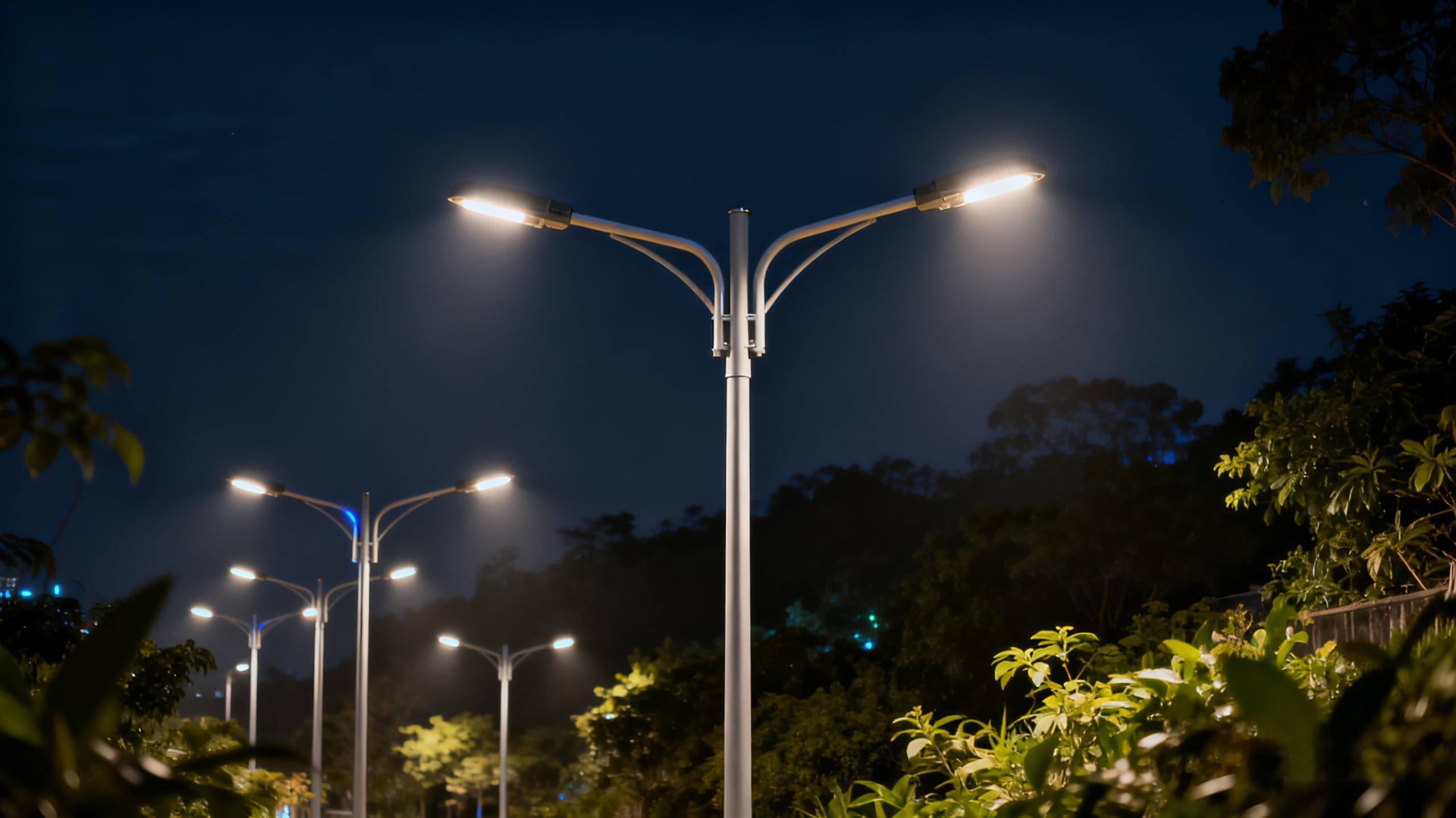
It is absolutely worth replacing the battery in a high-quality, professional solar street light. However, for cheap, decorative garden lights, the low cost and poor quality of the other components usually make replacement not worth the effort.
This question comes down to simple economics and asset management. I advise my clients to think about the light in two parts: the permanent fixture and the consumable battery.
A professional solar street light is a long-term asset. The LED fixture, the pole, and the solar panel are engineered to last for 20 years or more. The battery is the only major part designed to be replaced, with a typical lifespan of 8-10 years for a good LiFePO4 pack. Spending $400 to replace a battery in a $2,000 system to get another decade of service is a smart financial decision.
On the other hand, a cheap plastic solar garden light might cost $15. The entire unit is built to be disposable. The battery inside might cost $3, but the plastic will become brittle, the LED is low-grade, and the tiny solar panel will cloud over. Trying to replace the battery is often a frustrating exercise for a product that wasn't meant to be serviced.
| Light Type | Initial Cost | Battery Replacement Cost | Is it Worth It? |
|---|---|---|---|
| Professional Street Light | $1,500 - $3,000 | $300 - $600 | Yes, it's smart asset management. |
| Consumer Garden Light | $10 - $30 | $2 - $5 | No, the unit is disposable. |
Can I put regular AA batteries in my solar lights?
Your small solar garden light uses AA-sized batteries, and it's stopped working. You have a drawer full of regular alkaline AA batteries and it seems like a quick, easy fix.
No, you must never put regular, non-rechargeable AA batteries in a solar light. The solar panel's charging circuit will try to force energy into the single-use alkaline battery, which can cause it to leak corrosive acid or even rupture.
This is a critical safety warning I wish was printed in huge letters on every solar garden light package. The small lights that use AA or AAA batteries are designed specifically for rechargeable batteries, usually Nickel Metal-Hydride (NiMH) or Nickel-Cadmium (NiCd) types. These chemistries are engineered to safely accept and store a charge, day after day.
A regular alkaline battery, like a Duracell or Energizer, is a one-way chemical reaction. It's designed to be used once and then disposed of. When you put one in a solar light, the solar panel sends a small electrical current into it. This attempts to reverse the irreversible chemical process. The best-case scenario is that nothing happens. The worst-case, and most common, is that the battery overheats and the casing fails, leaking potassium hydroxide—a corrosive agent that will destroy the light's delicate electronics from the inside out. Always check the original battery's label and replace it with the same rechargeable type.
Conclusion
A solar light that lasts is not an accident. It's the result of a quality battery, a correctly sized panel, and a smart design that accounts for the real world, from cloudy days to financial contracts.