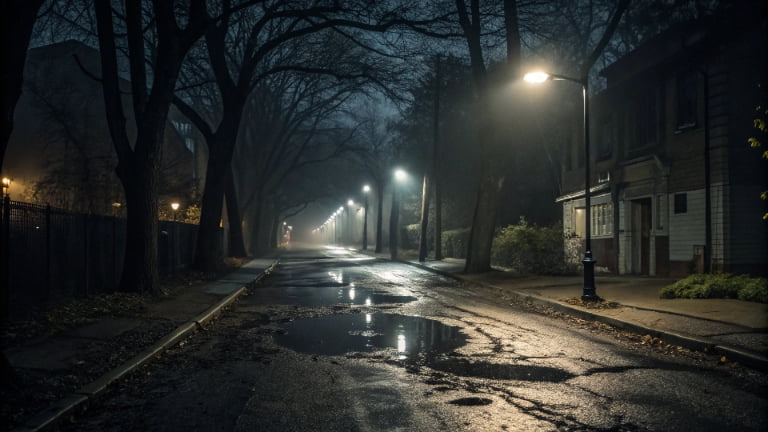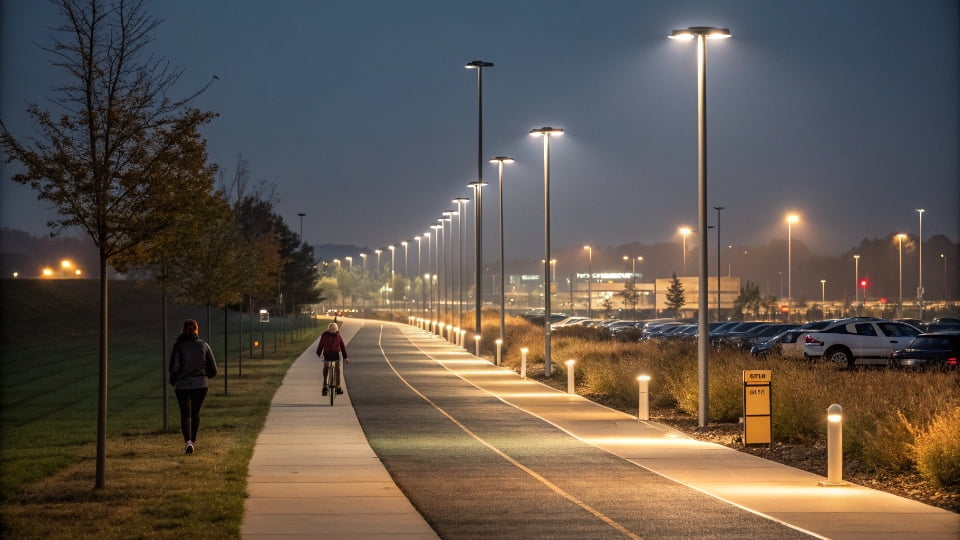
You manage a school or hospital, and your top priority is safety. But when the power goes out, your campus grounds go dark, creating risks for students, patients, and staff.
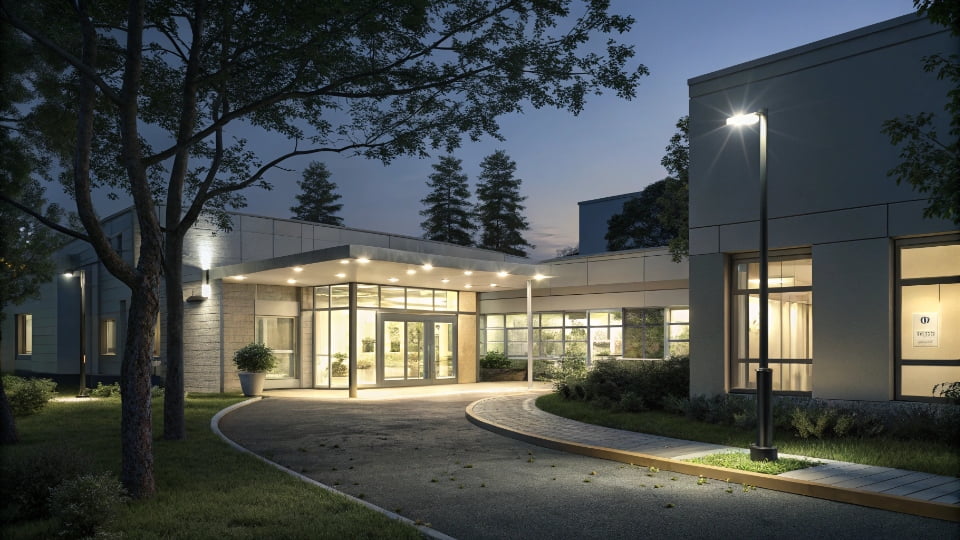
Schools and hospitals are switching to solar lighting because it operates independently from the electrical grid, providing crucial illumination during power outages 3. This enhances safety, promotes a green public image, and reduces the long-term maintenance burden on busy facilities staff.
Over my years in the street lamp industry, I've seen a major shift. It's no longer just cities and governments buying solar lights. Now, some of my most forward-thinking clients are facilities managers for schools and hospitals. They understand that a solar street light isn't just a lamp; it's a self-sufficient power system made of a panel, battery, controller, light, and pole [3](http://file/d4ef6704-33e8-4cef-aac8-1de9a36c5fc0.docx). This independence is a game-changer for places where safety and reliability are everything. Let's explore exactly why these critical facilities are making the switch.
Who doesn’t want reliable lighting during power outages in critical facilities?
A power outage hits your area. The hospital buildings switch to backup generators, but the parking lots and walkways are plunged into darkness. This creates a serious safety and security risk.
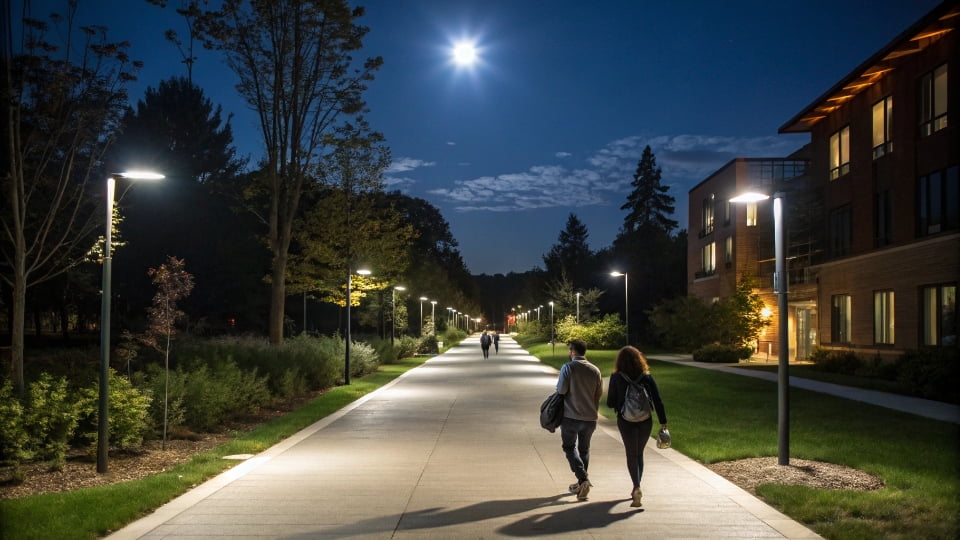
Solar street lights provide unmatched reliability because each one is an independent system that isn't affected by grid failures [3](http://file/d4ef6704-33e8-4cef-aac8-1de9a36c5fc0.docx). For even greater assurance, city-power hybrid systems can run on solar to save money but use the grid as a backup, ensuring 100% uptime [6](http://file/d4ef6704-33e8-4cef-aac8-1de9a36c5fc0.docx).
I'll never forget a call from a hospital administrator a few years ago. They had installed our solar lights in their main parking lot. A major storm caused a multi-hour blackout in their city. He told me that while the surrounding neighborhoods were dark, his parking lot was "a beacon of light." Staff could get to their cars safely, and incoming patients had a clear, secure path to the emergency entrance. That's the power of grid independence. It turns a potential liability into a showcase of preparedness.
How Solar Ensures the Lights Stay On
For a facility that operates 24/7, lighting isn't optional. Solar technology offers several layers of reliability that traditional grid-powered lights can't match.
- Grid Independence: The most obvious benefit is that a pure solar street light is its own power plant [3](http://file/d4ef6704-33e8-4cef-aac8-1de9a36c5fc0.docx). It generates, stores, and uses its own electricity. Neighborhood blackouts, downed power lines, and grid failures simply don't affect it. This is the highest level of energy security you can get for outdoor lighting.
- The Best of Both Worlds with Hybrids: For some facilities, 100% uptime is so critical that they want a backup for their backup. This is where city-power hybrid lights shine [6](http://file/d4ef6704-33e8-4cef-aac8-1de9a36c5fc0.docx). These systems run primarily on solar power, saving the hospital or school significant money on electricity bills. However, they remain connected to the grid. If several days of bad weather deplete the battery, the controller automatically switches to city power to keep the light on [6](http://file/d4ef6704-33e8-4cef-aac8-1de9a36c5fc0.docx). This is an excellent option for retrofitting old grid-powered lights, as the wiring is already in place [6](http://file/d4ef6704-33e8-4cef-aac8-1de9a36c5fc0.docx).
- Avoiding Unreliable Alternatives: Some consider wind-solar hybrids, but my engineer friend Bennett cautions against them in most cases. The small turbines are often inefficient unless you have very specific, consistent wind conditions, and they add significant cost and maintenance issues [5](http://file/d4ef6704-33e8-4cef-aac8-1de9a36c5fc0.docx). For critical facilities, the reliability of pure solar or a solar-grid hybrid is a much safer bet.
Can’t green initiatives enhance the public image of schools and hospitals?
You're competing for students, patients, and top-tier staff. You need to show that your institution is modern, responsible, and forward-thinking. A visible commitment to sustainability can set you apart.
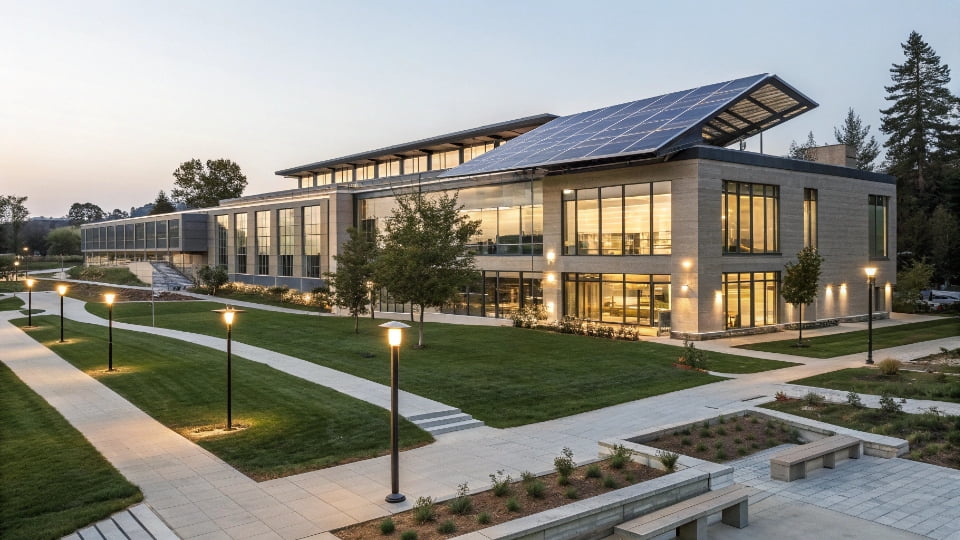
Yes, adopting solar lighting is a powerful and highly visible way to demonstrate a commitment to green energy. This enhances public image, attracts environmentally conscious people, and positions the institution as a leader in sustainability and innovation [3](http://file/d4ef6704-33e8-4cef-aac8-1de9a36c5fc0.docx).
From my experience, decisions are rarely made for just one reason. While safety is number one, the public relations benefit of solar is a close second for many schools and hospitals. Unlike rooftop solar panels that are often out of sight, solar street lights are right there on the ground for everyone to see. Every student who walks to a dorm, every patient who visits a clinic, sees them. It's a constant, silent message that says, "We care about the environment and our community's future." It tells a story of responsibility that resonates deeply with people today.
More Than Just Light: A Statement of Values
Investing in solar lighting is a strategic move that pays dividends in reputation and community perception.
| Benefit | How It Enhances Public Image |
|---|---|
| Visible Sustainability | Solar street lights are a tangible symbol of an institution's commitment to reducing its carbon footprint. It’s a 24/7 advertisement for your green credentials that resonates with an increasingly eco-conscious public. |
| Attracting Talent & Patrons | Today's students and professionals actively seek out institutions that align with their values. A campus powered by clean energy is a major selling point. Similarly, patients and their families appreciate a healthcare provider that invests in a healthier planet. |
| Educational Opportunities | For schools, the solar lights themselves can become a teaching tool. They provide a real-world example of renewable energy technology in action, sparking interest in STEM fields and environmental science among students. |
| Future-Forward Thinking | Adopting solar shows that an institution is innovative. It aligns the brand with cutting-edge technology. The science is even evolving toward things like biological energy from plants [3](http://file/d4ef6704-33e8-4cef-aac8-1de9a36c5fc0.docx). By adopting today's green tech, you position yourself as a leader ready for tomorrow's innovations [3](http://file/d4ef6704-33e8-4cef-aac8-1de9a36c5fc0.docx). |
Isn’t low-maintenance lighting a smart choice for busy campus and medical staff?
Your maintenance team is already stretched thin. The last thing they need is another complicated system to look after. You need a lighting solution that is reliable without adding to their workload.
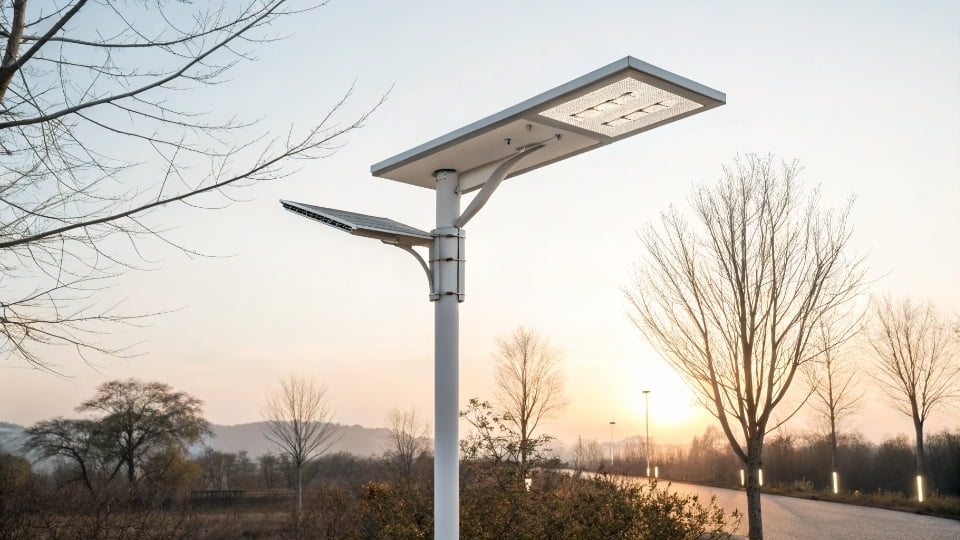
Yes, modern solar lighting is designed for minimal maintenance, making it a smart choice for busy facilities. Simple all-in-one systems can be installed quickly without any complex wiring, making them ideal for pathways and courtyards [1](http://file/d4ef6704-33e8-4cef-aac8-1de9a36c5fc0.docx).
When I was starting out in the factory, everything was complicated. Now, the goal is simplicity. I recently worked with a large medical campus that needed to add lighting to several long walkways between buildings. Trenching for new electrical lines would have been disruptive and incredibly expensive [6](http://file/d4ef6704-33e8-4cef-aac8-1de9a36c5fc0.docx). Instead, we used all-in-one solar lights. My client was amazed. The installation was fast, with no digging and no external wiring needed [1](http://file/d4ef6704-33e8-4cef-aac8-1de9a36c5fc0.docx). The lights just worked, right out of the box. For busy staff, this "set it and forget it" nature is a huge relief.
Choosing the Right Low-Maintenance Option
The key to a low-maintenance system is selecting the right type of solar light for the right job.
- Simplicity for Walkways: For pedestrian areas like courtyards, small paths, and campus quads, the all-in-one solar light is often the perfect solution [2](http://file/d4ef6704-33e8-4cef-aac8-1de9a36c5fc0.docx). All the components—panel, battery, controller, and light—are integrated into a single fixture [1](http://file/d4ef6704-33e8-4cef-aac8-1de9a36c5fc0.docx). This means installation is as simple as mounting the unit on a pole [1](http://file/d4ef6704-33e8-4cef-aac8-1de9a36c5fc0.docx). There are no wires to connect, which eliminates a major point of potential failure and simplifies the process for maintenance crews [1](http://file/d4ef6704-33e8-4cef-aac8-1de9a36c5fc0.docx).
- Avoiding High-Cost Repairs: While all-in-one lights are easy to install, it's important to know that if a single component fails, the entire unit must be replaced, which can increase long-term service costs [2](http://file/d4ef6704-33e8-4cef-aac8-1de9a36c5fc0.docx). That's why for critical main roads on campus, a split-type system with individually replaceable parts is often a better long-term investment, even if the initial installation is more complex.
- Eliminating Major Expenses: Compared to grid-powered lights, the biggest maintenance saving from solar is the elimination of electricity bills. But just as important is avoiding the massive cost and disruption of trenching and laying underground cables, which is a requirement for any new grid-powered installation [6](http://file/d4ef6704-33e8-4cef-aac8-1de9a36c5fc0.docx). Solar lighting bypasses this entirely, saving significant time and money upfront.
Conclusion
Schools and hospitals choose solar lighting for three clear reasons: it guarantees light during outages, showcases a commitment to sustainability, and frees up staff by being incredibly low-maintenance. It's a smart, reliable choice that delivers value on every level—from safety and cost savings to public perception and environmental responsibility.