Running grid power to a remote sign is expensive and disruptive. You want your business sign or billboard to be visible 24/7, but the high cost of trenching cables and ongoing electricity bills makes it seem impossible.
Lighting a sign with a solar system is the ideal solution because it eliminates the need for grid power, trenching, and cabling [3][4]. This makes installation simple and cost-effective, especially for signs in remote locations, while offering automated, maintenance-free operation through smart controls [1].

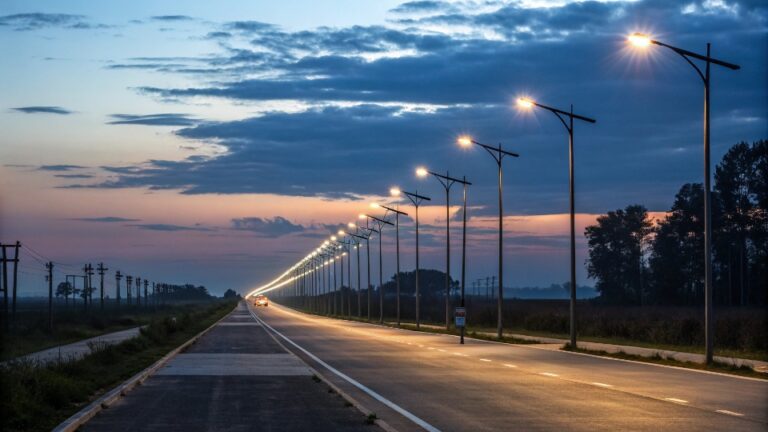
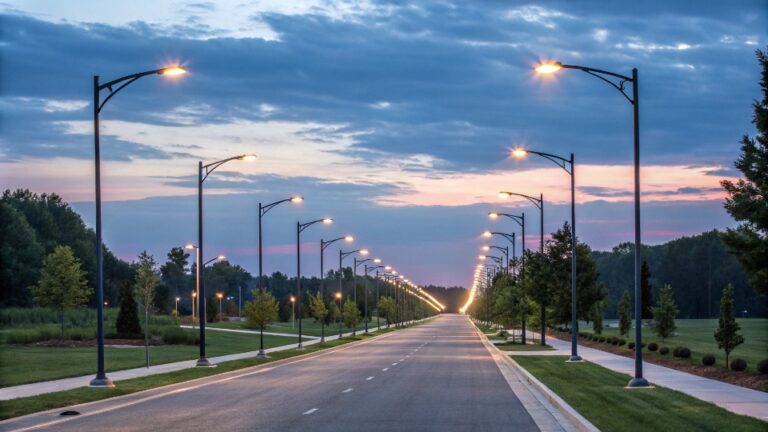
I've had so many clients focus on massive street lighting projects, thinking solar is only for big infrastructure. But the real magic is how this technology scales down perfectly. My lead engineer, Bennett, often points out that the same principles that light up a highway can be applied to make a single sign shine brightly, without any of the usual costs or headaches. It’s about using a self-contained power source to solve a very common problem simply and effectively.
How Does Solar Eliminate Installation Headaches?
The cost to run power lines can be astronomical, often more than the sign itself. You're facing permits, digging up property, and a new monthly electricity bill just for visibility.
Solar lighting systems are completely self-contained, requiring no trenching, cabling, or connection to the electrical grid [4]. This dramatically cuts installation costs and complexity, making them perfect for signs located away from existing power sources where conventional wiring would be impractical and expensive.

A client once told me he was quoted thousands just to run a power line across a parking lot to a new entrance sign. The project was dead on arrival until we looked at a solar option. The all-in cost for the solar lighting system was a fraction of the trenching cost alone.
The Cost of Grid Power vs. Solar Freedom
Lighting a traditional sign means connecting to the grid. This involves a lot more than just flipping a switch. You have to consider multiple factors that add significant cost and time to your project. In contrast, a solar lighting system is independent, bypassing these issues entirely.
| Factor | Grid-Powered Sign | Solar-Powered Sign |
|---|---|---|
| Installation | Requires digging trenches, laying conduit, and extensive electrical wiring. | No trenching or grid connection needed. Simple mounting of the fixture. |
| Labor | Needs licensed electricians, and potentially a crew for excavation. | Can often be installed by a general contractor; no complex wiring [3]. |
| Permits | Often requires electrical and construction permits for digging and grid connection. | Typically requires minimal or no permitting. |
| Ongoing Costs | Monthly electricity bills for the life of the sign. | Zero electricity bills. The sun provides the power for free. |
By choosing solar, you are choosing a system that is defined by its simplicity. You purchase the unit, mount it near your sign, and it works. This is especially true for modern integrated lights where all the wiring is done at the factory, eliminating the risk of installation errors [3][6]. It turns a major construction project into a simple afternoon task.
What Kind of System is Best for a Sign?
You see different types of solar lights and don't know which is right. Choosing the wrong one could mean poor performance, an ugly installation, or not enough light for your sign.
For most signs, a compact all-in-one (integrated) solar light is the best choice [3]. It combines the panel, battery, and light into one easy-to-install unit, providing a clean look [3]. For very large billboards needing more power, a split-type system offers greater flexibility and performance [6].

When integrated lights first came out, I was skeptical. They seemed to compromise too much for convenience. But I quickly realized that for smaller applications like sign and pathway lighting, their benefits are undeniable. They make solar accessible for projects that would never have considered it before.
The All-in-One Advantage for Signs
An all-in-one, or integrated, light is exactly what it sounds like: the solar panel, lithium battery, controller, and LED lamp are all built into a single, compact housing [1][3]. This design is almost perfectly suited for sign lighting. Its main advantages are convenience in transport and installation, as all components are in one box and pre-wired [3]. You simply bolt the unit onto a pole or wall and point it at your sign. This design is ideal for lighting standard-sized commercial signs, park maps, or community notice boards where a clean aesthetic and simple setup are important.
When to Use a Split-Type System
However, an all-in-one light has performance limitations. The panel size is limited by the fixture's body, which caps its power generation [3]. For a massive billboard on the side of a highway that needs powerful floodlights, an all-in-one unit won't be enough. This is where the original split-type system is the superior choice [1][6]. A split system keeps the panel, battery, and light as separate components [1]. This allows you to use a very large, high-wattage solar panel and angle it perfectly towards the sun for maximum charging [3]. You can also use a large battery bank to power multiple high-wattage floodlights all night. This flexibility is what makes split systems the only reliable choice for large-scale sign illumination [6].
How Can Smart Controls Optimize Sign Lighting?
You don't want your sign light on during the day or running at full power all night. This wastes precious stored energy and shortens the lifespan of the system's battery.
Smart controls automate sign lighting for maximum efficiency. "Light control" uses the solar panel to automatically turn the light on at dusk and off at dawn [1]. "Time control" allows you to program different brightness levels for different parts of the night, saving energy [1].

The smartest features are the ones you set once and never think about again. That's the beauty of the controllers in modern solar systems. They do all the work for you, ensuring your sign is lit effectively while conserving as much energy as possible.
Set-and-Forget Automation
The two most important smart features for sign lighting are light control and time control [1].
-
Light Control: This is the most basic automated function. The solar controller uses the solar panel as its light sensor. When it detects that the sun has set (because the panel's voltage drops), it automatically turns on the light. At dawn, when the panel's voltage rises, it turns the light off [1]. This ensures the light is only running when it's dark, with no need for a manual switch or a complex timer.
-
Time Control : Running a sign at 100% brightness all night is unnecessary. High-quality controllers allow you to set multiple time periods with different brightness levels [1]. This is perfect for a business sign.
| Time Period | Example Time | Brightness | Rationale |
|---|---|---|---|
| Closing Hours | 7:00 PM - 12:00 AM | 100% | The sign is fully visible during peak traffic and after closing. |
| Deep Night | 12:00 AM - 5:00 AM | 30% | Keeps the sign visible for branding but saves significant energy. |
| Morning | 5:00 AM - Dawn | 50% | Brightens slightly for early morning commuters. |
This scheduled dimming dramatically reduces the system's nightly energy consumption. This means you can use a smaller, more affordable battery and solar panel while still achieving reliable, multi-day performance even in cloudy weather.
Conclusion
Using a solar lighting system for your sign eliminates grid-related costs and installation hassles, offering an affordable, independent, and automated solution for any location [3][4]. It's a smart investment in visibility.