You want to power your appliances with solar energy, but it's confusing. You see a 200W panel and wonder if it's enough for something big like a fridge.
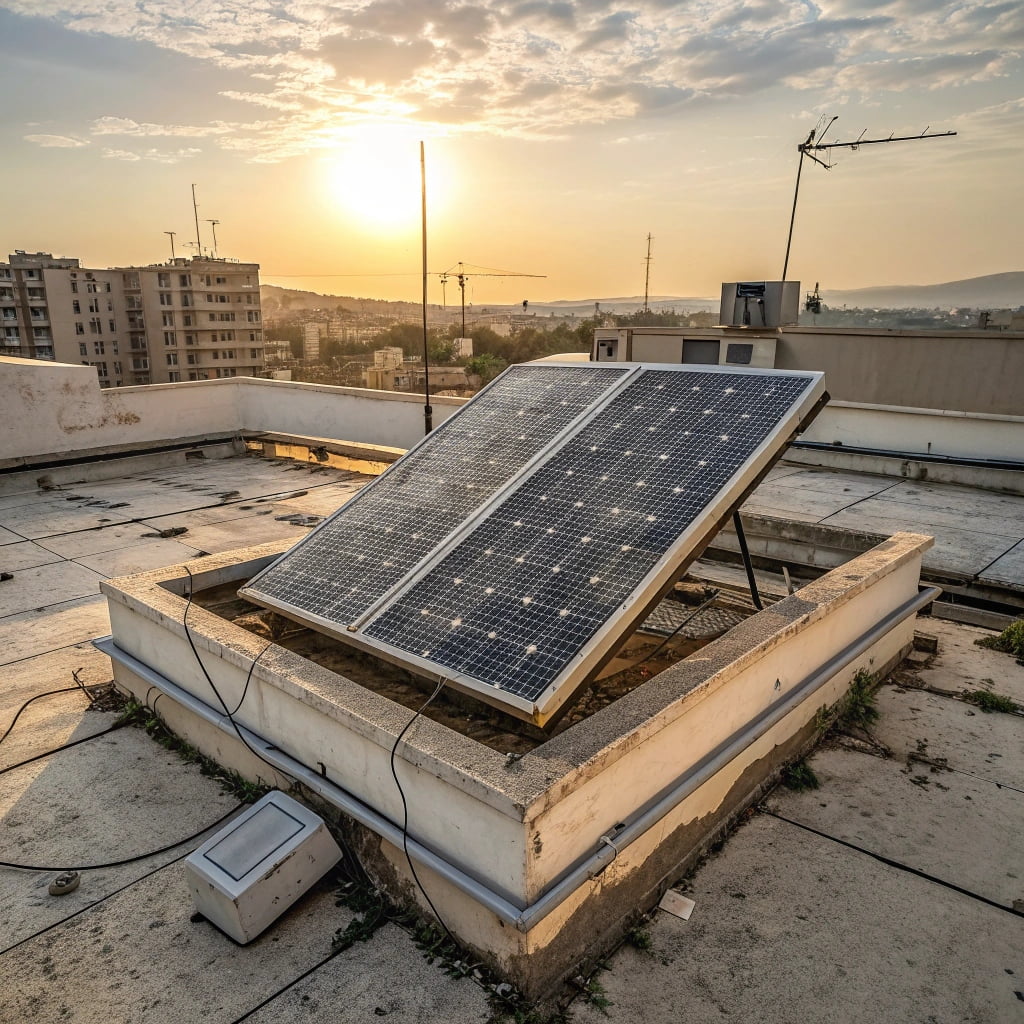
No, a 200W solar panel by itself cannot run a refrigerator. A fridge needs a complete system: batteries to store power for nighttime and cloudy days, and an inverter to convert the panel's DC power to the AC power your fridge uses. A 200W panel is likely too small for a standard fridge system.
I've been in the solar lighting industry for years, and I get questions like this all the time. People see a panel and think of it like plugging something into a wall outlet. It's not that simple. A solar setup is a full power-generating plant in miniature. My friend Bennett, a brilliant engineer, always says, "It’s about the system, not just the panel." To run a fridge, you need to calculate its daily energy use and build a system that can generate and store that much power reliably. Let's break down what that really involves.
What Angle Works Best for Solar Panels?
You've installed your solar panels but aren't getting the power you expected. It's frustrating when your investment doesn't perform. A bad angle could be the culprit, silently wasting sunlight.
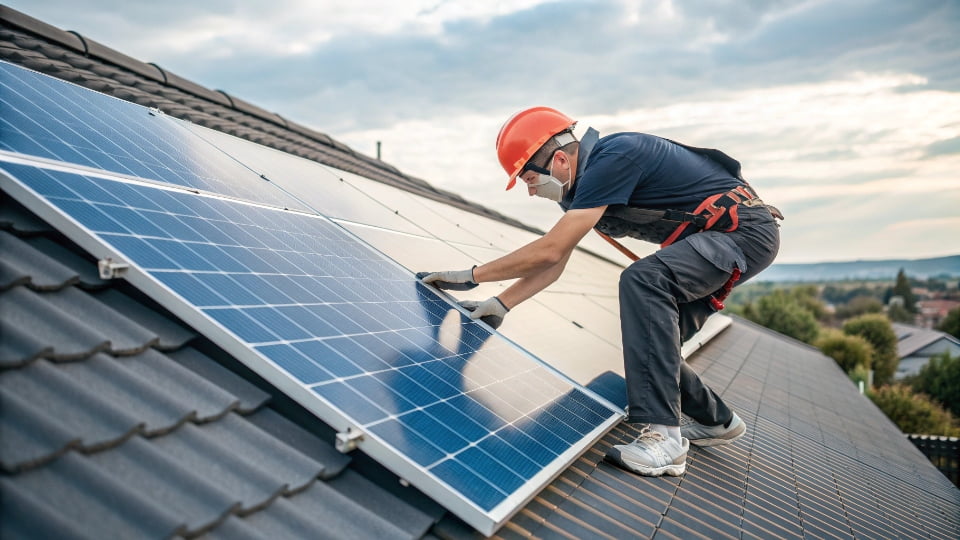
The best angle for solar panels is generally an angle equal to your geographical latitude, pointed towards the equator. For even better performance, adjust the angle seasonally: make it steeper in winter to catch the low sun and flatter in summer for the high sun.
Getting the angle right is something we obsess over in the solar street light business. It’s the difference between a light that works and one that fails. In my work, I've seen how a poor angle can cripple a system. For example, some all-in-one street lights have a fixed panel angle of about 15 degrees to match the light's direction [1]. In a place like Canada or most of the US, where the ideal angle is closer to 45 degrees, this fixed position can cut power generation by more than half [1]. This same principle applies to your home system. The goal is to have the sun's rays hit the panel at a 90-degree angle for as long as possible.
Finding Your Perfect Tilt
The "latitude rule" is your best starting point. If you live at 40° latitude, your ideal year-round angle is 40°. But you can do even better with seasonal adjustments.
| Season | Angle Adjustment | Reason |
|---|---|---|
| Winter | Latitude + 15 degrees | The sun is lower in the sky, so a steeper angle is needed to face it directly. |
| Summer | Latitude - 15 degrees | The sun is higher in the sky, so a flatter angle works best. |
| Spring/Fall | Latitude | This is the middle ground and the best fixed angle if you don't want to adjust it. |
This might seem like a small detail, but over the course of a year, these adjustments can increase your total energy output by 10-15%. It's free energy, just for taking the time to get the tilt right. Don't forget orientation, either. In the Northern Hemisphere, your panels must face south. In the Southern Hemisphere, they must face north.
What Roof Pitch is Best for Solar Panels?
You're worried your roof isn't the "perfect" pitch for solar panels. Does this mean you can't go solar or that your system will be inefficient? Let's clear up this common concern.
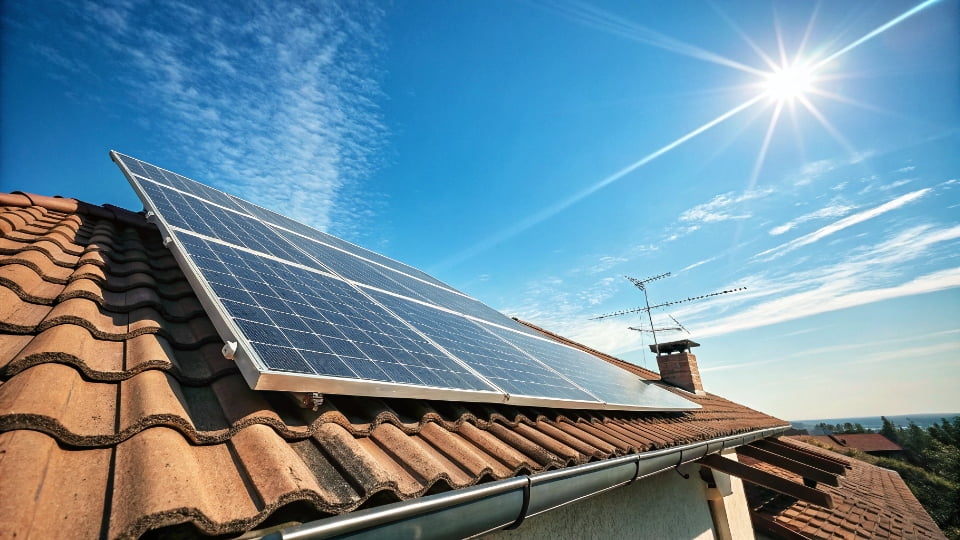
The ideal roof pitch for solar panels is one that matches your latitude. However, panels work very efficiently within a wide range of angles, and mounting racks can be used to achieve the optimal tilt on any roof, even a flat one. A non-ideal roof pitch is rarely a showstopper.
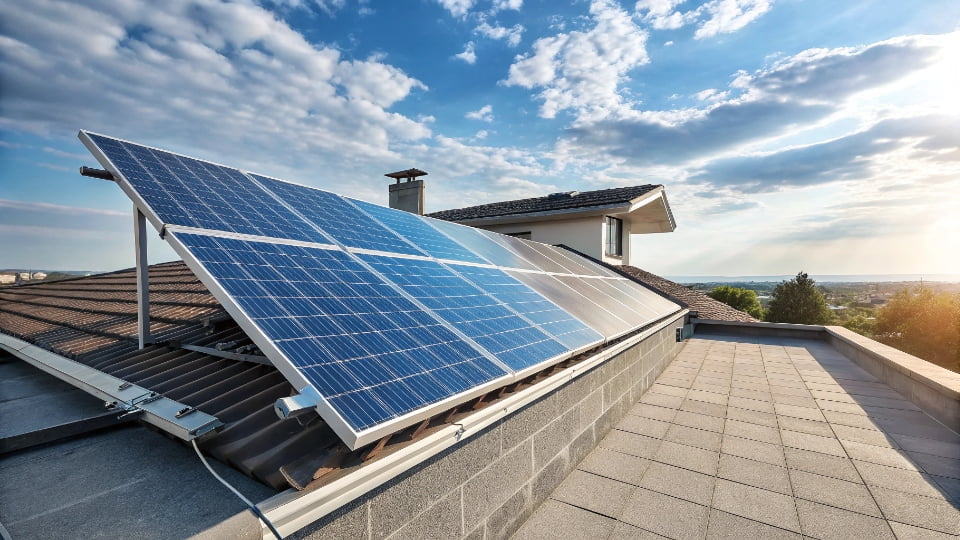
While the perfect angle is great in theory, in the real world, we have to be practical. Most residential solar installations mount the panels flush with the roof. It looks better, it's simpler to install, and it has fewer issues with wind load. The good news is that modern solar panels are incredibly efficient. Even if your roof pitch is 15 degrees off from the "perfect" angle, the performance loss is often less than 5%. For most people, the simplicity of a flush mount outweighs the small gain from a complex tilted-rack system. The exception is flat roofs. On a flat roof, you absolutely must use tilted racks to give the panels an angle. This not only captures more sun but also helps rain wash the panels clean. We see this issue with solar street lights, where the tilt is crucial. Many regions need a 30-45 degree angle for maximum solar radiation [1]. When a light is designed with a fixed, non-optimal angle, its performance suffers greatly [1]. Luckily with home roofs, you have more flexibility.
| Your Situation | Best Approach |
|---|---|
| Pitched roof facing the equator | Mount panels flush with the roof. It's the most common and cost-effective method. |
| Flat roof | Use tilted mounting racks set to your latitude. This is essential for performance. |
| Pitched roof facing east or west | Still viable, but you will generate less power. You may need more panels to compensate. |
| Pitched roof facing away from the equator | This is the worst-case scenario. It's better to consider a ground-mounted system if you have space. |
Don't let your roof shape discourage you. A professional installer can assess your specific situation and design a system that works great for you.
Is a 90% Efficient Solar Panel Possible?
You see ads for "super-efficient" panels and wonder what's possible. Are we close to panels that capture almost all of the sun's energy? Let's separate the marketing hype from scientific reality.
No, a 90% efficient solar panel is not possible with today's technology. The absolute theoretical maximum efficiency for standard silicon panels is around 33%. Commercial panels you can buy today typically have efficiencies between 17% and 23%.
In science, there are hard limits. For solar panels, this is called the Shockley-Queisser Limit. In simple terms, the silicon material used in most panels can only convert certain wavelengths of light into electricity. The rest of the light either passes through or just heats the panel up. This physical limit is about 33%. So, anyone claiming 40%, 50%, or even 90% efficiency for a commercial panel is not being honest. However, don't be disappointed by a 23% efficiency rating. That is an incredible feat of engineering! It means the panel is converting nearly a quarter of all the sun's massive energy that hits it directly into usable electricity. In my industry, we focus on system efficiency. A 23% efficient panel is useless if it's connected to a bad battery that wastes the power. For example, using a modern lithium battery instead of an old gel battery can improve energy utilization by 20-30% because of its higher depth of discharge [4]. It's about how well all the parts work together.
Understanding Efficiency Numbers
When you're shopping, you'll see different types of panels with different efficiency ratings. Here’s a quick guide:
| Panel Type | Typical Efficiency | Characteristics |
|---|---|---|
| Monocrystalline | 19% - 23% | Made from a single silicon crystal. They are the most efficient, have a sleek black look, and are the most expensive. |
| Polycrystalline | 17% - 19% | Made from melted silicon fragments. They are slightly less efficient, have a blue, speckled look, and are more affordable. |
| Thin-Film | 10% - 13% | Lower efficiency and require more space, but they are flexible and perform better in low light or high heat. |
Higher efficiency doesn't always mean "better." It means you can generate more power from a smaller area. If you have a huge roof, you might save money by using more polycrystalline panels. If your space is limited, high-efficiency monocrystalline panels are the best choice to maximize your power output.
Conclusion
A 200W panel won't run a fridge alone; you need a full system. Maximize power by angling your panels correctly, and understand that today's 23% efficiency is powerful, not magic. By focusing on system balance—matching panels, batteries, and inverters to your actual energy needs—and optimizing panel angle for your location, you can build a solar setup that reliably powers your home appliances.